
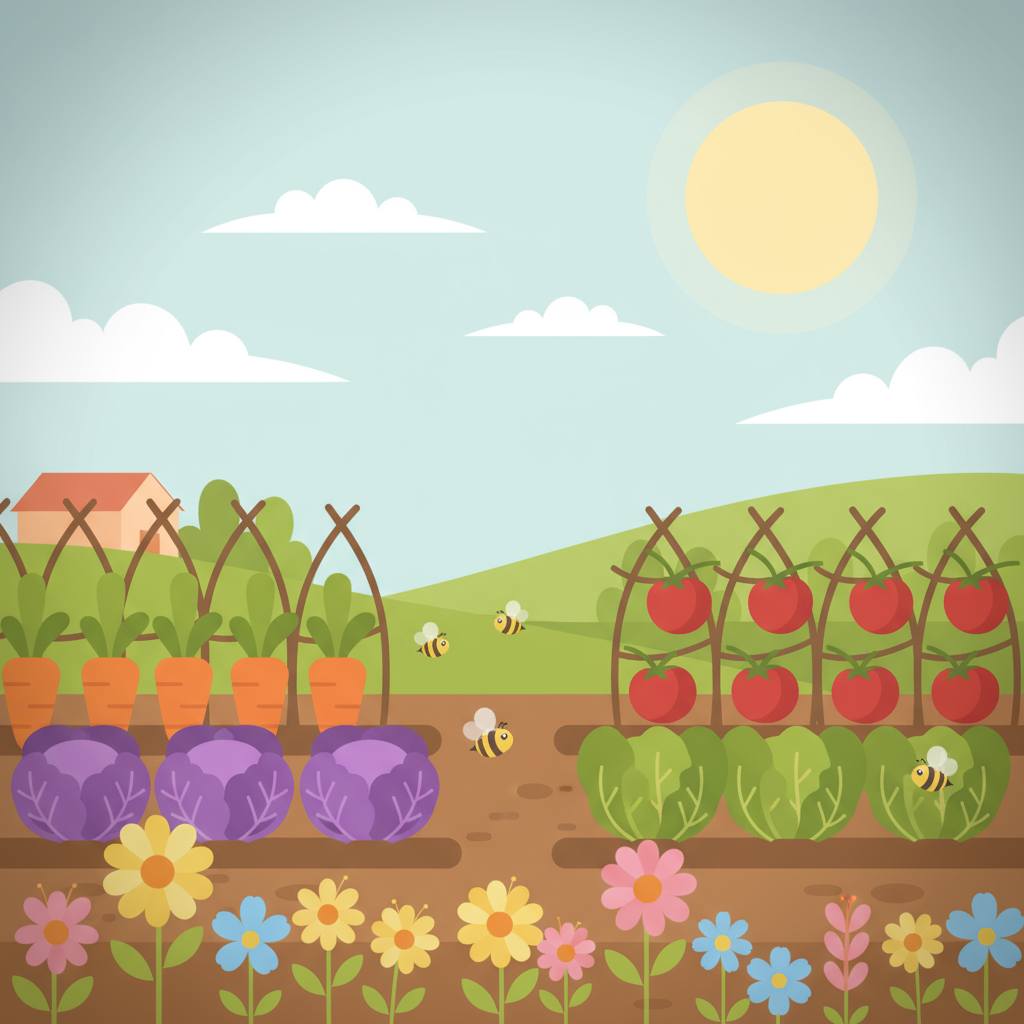
If you’re a vegetable gardener, you know how vital pollinators are to a thriving garden. Without bees, butterflies, and other pollinators, your vegetables may not grow as well or yield as much.
The good news is you can encourage pollinators visit your vegetable garden by adopting simple daily habits. These small, consistent actions help make your garden a welcoming home for these helpful insects.
With easy daily habits that fit your routine, you can watch your garden flourish as more pollinators come by to do their essential work.
Your 3 Daily Habits To Encourage Pollinators Visit
Habit 1 — Plant a Diversity of Pollinator-Friendly Flowers
Why: Encouraging pollinators to visit starts with providing food. Many pollinators rely on nectar and pollen from flowers, so having a variety of pollinator-friendly plants helps attract different species all season.
How: Each day, check your garden and add or nurture a few flowering plants like lavender, coneflowers, or borage. Even planting a few native wildflowers nearby can make a big difference.
Cue: When you water your vegetables, take a moment to water or tend to your flowering plants as well.
Habit 2 — Provide Fresh Water Sources
Why: Pollinators also need water to survive and function. A shallow water source helps keep them around your garden.
How: Every day, check a small water dish or shallow bowl with pebbles placed in your garden to keep it clean and filled. This encourages pollinators to stay longer.
Cue: Link this habit to your morning or evening garden walk, so it becomes part of your routine.
Habit 3 — Avoid Using Harmful Chemicals
Why: Pesticides and herbicides are dangerous to pollinators. Keeping your garden chemical-free protects these vital helpers.
How: Each day, monitor your plants for pests and try natural pest control methods such as introducing beneficial insects or hand-picking pests.
Cue: Set a daily reminder to inspect your plants at the same time each day.
Week 1 Schedule
| Day | Action |
|---|---|
| Monday | Water vegetables and pollinator-friendly flowers; check water source |
| Tuesday | Inspect plants for pests; plan to add a few flowering plants |
| Wednesday | Refresh water source and remove debris if any |
| Thursday | Water flowers; hand-pick any pests found |
| Friday | Check soil health; mulch around plants to protect pollinators |
| Saturday | Water all plants; add new pollinator-friendly flowers if possible |
| Sunday | Take note of pollinator activity and adjust plans for next week |
Troubleshooting
Barrier: No pollinators visiting despite planting flowers.
Fix: Make sure you have a variety of native flowering plants blooming at different times to provide continuous food. Try adding flowers that are known to attract local pollinators.
Barrier: Water source gets dirty or stagnant.
Fix: Clean and refill your water dish daily to keep it fresh and safe for pollinators.
Barrier: Accidental pesticide use.
Fix: Choose natural pest control methods and educate yourself about pollinator-safe gardening.
FAQs
Q: How quickly will I see pollinators after starting these daily habits?
A: It can take a few days to a few weeks depending on your environment, but consistently following these habits greatly increases your chances of attracting pollinators.
Q: What types of flowers are best for attracting pollinators?
A: Native wildflowers, lavender, borage, coneflowers, and sunflowers are popular choices that provide nectar and pollen.
Q: Can I still grow vegetables if I focus more on flowers?
A: Absolutely! Flowers complement vegetable growth by attracting pollinators which improve vegetable yield.
Tracking & Motivation Tips
Use a simple garden journal or smartphone app to record which pollinators you spot and how often. Seeing your progress encourages you to keep up your daily habits to encourage pollinators visit your garden regularly.
Key Takeaways To Encourage Pollinators Visit
Consistently practicing simple daily habits like planting diverse pollinator-friendly flowers, providing water, and avoiding chemicals will help you encourage pollinators visit. These habits support a lively garden ecosystem and boost your vegetable growth.