
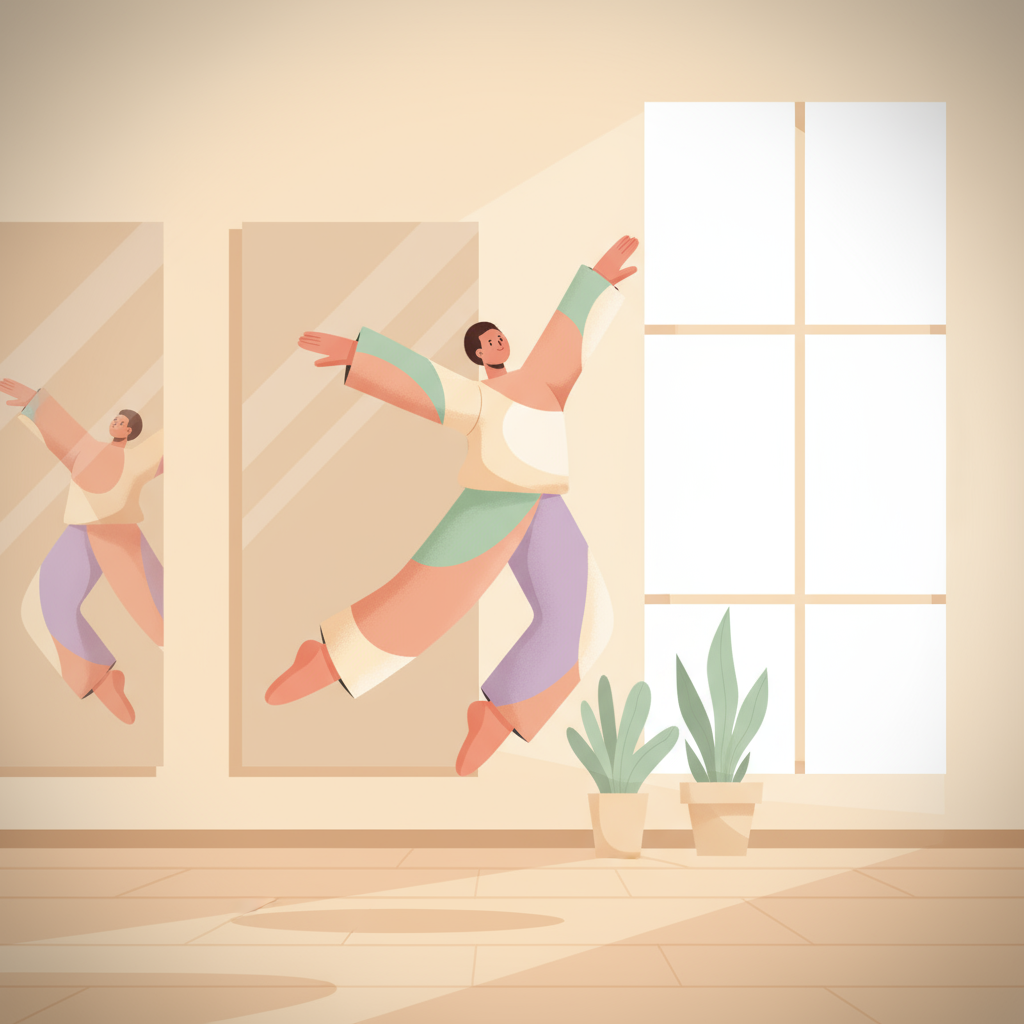
Learning to dance improvisation can feel intimidating. It requires not just physical skill, but a mental openness to move spontaneously and creatively.
Good news is that dance aficionados like you can build confidence and skill in dance improvisation through simple daily habits that train your mind and body to flow freely with music and movement.
This article shares research-backed daily habits to help you unlock your creative potential, trust your instincts, and enjoy improvising with authenticity and joy.
Your 3 Daily Habits To Learn Dance Improvisation
Habit 1 — Practice Free Movement Journals
Why: Dance improvisation thrives when you feel free and authentic. Practicing free movement without judgement trains your brain and body to express without overthinking.
How: Dedicate 15 to 20 minutes daily to move spontaneously to music or silence. No goals, no planned steps, just respond to your internal impulses.
Cue: Right after waking up or wind down time works well to connect with your natural internal rhythm.
Habit 2 — Explore Movement Textures Inspired By Your Surroundings
Why: Using sensory cues from your environment can spark unique movement ideas and deepen your improvisation.
How: Spend 10 minutes each day noticing textures around you — like water, wind, or stones — and try to embody their qualities in your movement. Think about shapes, energy, and flow.
Cue: Use a break during the day or a walk outside as a reminder to engage your senses for movement inspiration.
Habit 3 — Use Focused Improv Prompts
Why: Clear improv prompts reduce anxiety and focus your creativity, helping you explore different movement qualities.
How: Select a simple prompt daily (e.g., move only with your arms, dance in slow motion, or improvise within an imaginary box). Set a timer for 5-10 minutes and respond fully to the prompt.
Cue: Before a dance practice or whenever you crave structure, start with a prompt to warm up your improvisation skills.
Week 1 Schedule
| Day | Habit 1 | Habit 2 | Habit 3 |
|---|---|---|---|
| Monday | Free Movement Journal (15 mins) | Movement Texture Exploration (10 mins) | Improv Prompt: Move Using Only Your Arms (5 mins) |
| Tuesday | Free Movement Journal (15 mins) | Movement Texture Exploration (10 mins) | Improv Prompt: Dance in Slow Motion (5 mins) |
| Wednesday | Free Movement Journal (15 mins) | Movement Texture Exploration (10 mins) | Improv Prompt: Move Within an Imaginary Box (5 mins) |
| Thursday | Free Movement Journal (20 mins) | Movement Texture Exploration (10 mins) | Improv Prompt: Move Like Water (7 mins) |
| Friday | Free Movement Journal (20 mins) | Movement Texture Exploration (10 mins) | Improv Prompt: Use Only Legs and Feet (5 mins) |
| Saturday | Free Movement Journal (20 mins) | Movement Texture Exploration (10 mins) | Improv Prompt: Explore Levels (Low, Mid, High) (7 mins) |
| Sunday | Rest or Light Free Movement | Reflection on Movement Textures | Optional Freestyle Improv (10 mins) |
Troubleshooting
Barrier: Fear of looking silly or making mistakes during improvisation.
Fix: Remind yourself that looking “bad” initially is part of the creative process and essential for growth. Focus on movement quality and texture over perfection to learn dance improvisation.
Barrier: Overthinking each movement and losing flow.
Fix: Use sensory prompts or natural elements as cues to get out of your head and into your body. Practicing free movement journals regularly can help quiet the mind.
Barrier: Difficulty knowing how to start improvising.
Fix: Start with simple focused improv prompts to give clear direction. As you gain confidence, gradually reduce structure.
FAQs
Q: How long should each dance improvisation practice be?
A: Start with short sessions, around 10-20 minutes. Consistency is more important than duration for learning dance improvisation.
Q: Do I need music to practice improvisation?
A: Not necessarily. Dancing in silence or with ambient sounds can deepen your awareness and connection to your body for learning dance improvisation.
Q: How do I stay motivated to keep practicing daily?
A: Set small achievable goals and celebrate progress. Scheduling your practice after a daily habit like waking or before bed can build regularity.
Tracking & Motivation Tips
Use a journal or app to record your daily improvisation practice and reflections. Notice how your confidence, creativity, and flow evolve with consistent application of these daily habits to learn dance improvisation.
Key Takeaways on Learning Dance Improvisation With Daily Habits
Learning dance improvisation is accessible when approached with simple, focused daily habits. Practicing free movement, exploring sensory-inspired textures, and using clear improv prompts creates a supportive structure that builds your confidence and expressive ability over time. Embrace imperfection, stay consistent, and enjoy the journey of discovering your unique dance voice.