
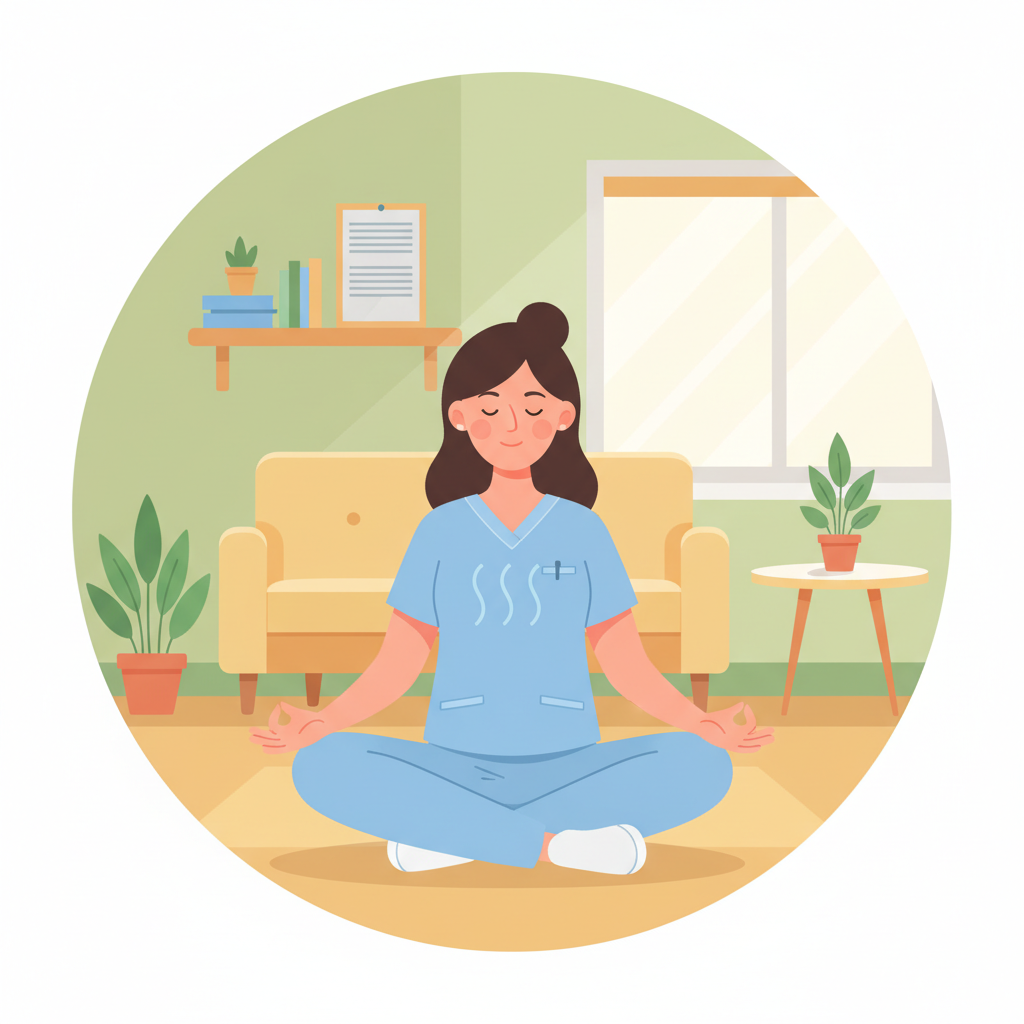
Being a doctor often means juggling intense workloads, emotional strain, and nonstop decisions. It can leave you feeling stressed, unfocused, and burned out by the end of your shift.
Mindfulness for doctors offers a simple way to regain balance and improve your well-being without needing large time commitments. By practicing small, intentional daily habits, you can enhance your focus, reduce stress, and connect more deeply with your work and patients.
In this article, you’ll discover three easy mindfulness practices tailored for busy healthcare professionals like you. These practical habits are designed to fit seamlessly into your daily routine and build lasting emotional resilience.
Your 3 Daily Habits To Incorporate Mindfulness For Doctors
Habit 1 — Mindful Breathing Breaks
Why: Mindful breathing is the foundation of mindfulness for doctors. It helps reset your nervous system, reducing anxiety and sharpening focus before stressful moments.
How: Between patients or appointments, take 30 seconds to breathe in a calm and steady rhythm. Inhale deeply through your nose and exhale slowly through your mouth, paying close attention to the sensations of your breath entering and leaving.
Cue: Use transitions such as finishing notes or entering a patient room as a trigger to pause and focus on your breath.
Habit 2 — Mindful Handwashing
Why: Handwashing is a frequent and necessary activity during your day. Turning it into a mindfulness moment anchors you to the present and provides a brief mental break.
How: While washing your hands, focus fully on the tactile sensations — the temperature of the water, the texture of the soap, and the movements of your hands. Use this time (30 to 40 seconds) as a moment of calm instead of rushing through.
Cue: Each handwash is a prompt to practice mindfulness with your senses.
Habit 3 — The Doorknob Pause (S.T.O.P. Practice)
Why: Entering a patient’s room or a meeting can be stressful. The doorknob pause interrupts autopilot mode and helps you regain presence.
How: When your hand touches a door handle or doorknob, stop what you are doing, take a few deep breaths, observe how you feel and your surroundings without judgment, then intentionally choose how to proceed.
Cue: The physical act of touching a door or doorknob triggers this mindfulness pause.
Week 1 Schedule
| Day | Mindful Breathing | Mindful Handwashing | Doorknob Pause |
|---|---|---|---|
| Monday | 7 times (between patients) | Practice with 3 handwashes | 10 doorknob pauses |
| Tuesday | 7 times | 3 handwashes | 10 doorknob pauses |
| Wednesday | 7 times | 3 handwashes | 10 doorknob pauses |
| Thursday | 7 times | 3 handwashes | 10 doorknob pauses |
| Friday | 7 times | 3 handwashes | 10 doorknob pauses |
| Saturday | 3 times (anytime) | Practice at home handwashes | Use door pause at home |
| Sunday | 3 times | Practice at home | Use door pause at home |
Troubleshooting
Barrier: Forgetting to pause during busy hectic shifts.
Fix: Set reminders on your phone or place sticky notes near workstations to prompt mindful breathing and doorknob pauses. Gradually, these will become automatic parts of your routine.
Barrier: Difficulty focusing during mindfulness due to distractions.
Fix: It is normal for your mind to wander. Gently redirect your attention back without judgment. Start with shorter sessions and build your focus over time.
Barrier: Feeling rushed during handwashing and skipping the mindful practice.
Fix: View mindful handwashing as a valuable mental break that improves your performance and well-being. Count slowly to 30 while washing hands to pace yourself.
FAQs
Q: How long should a mindfulness practice be for doctors?
A: Even brief mindfulness exercises of 30 seconds to a few minutes are highly beneficial. Consistency matters more than duration.
Q: Is mindfulness only helpful for stress relief?
A: Mindfulness for doctors also improves focus, emotional regulation, and patient communication.
Q: Can I practice mindfulness during my workday?
A: Absolutely! Mindfulness practices like mindful breathing and doorknob pauses are designed to fit into your daily work routine without disruption.
Tracking & Motivation Tips
Keep a simple journal or use an app to track how often you practice mindfulness for doctors each day. Note any feelings of calm or focus improvement you observe. Celebrate small wins and remind yourself that these daily habits build long-term emotional resilience and professional satisfaction. Pair mindfulness practice with a supportive peer or buddy for encouragement and accountability.
Key Takeaways About Mindfulness For Doctors
Mindfulness for doctors can be as easy as mindful breathing, mindful handwashing, and the doorknob pause. These daily habits enhance your focus, reduce stress, and help you stay present with patients and colleagues. Start small, track your progress, and watch your resilience grow as you integrate mindfulness into your routine.