
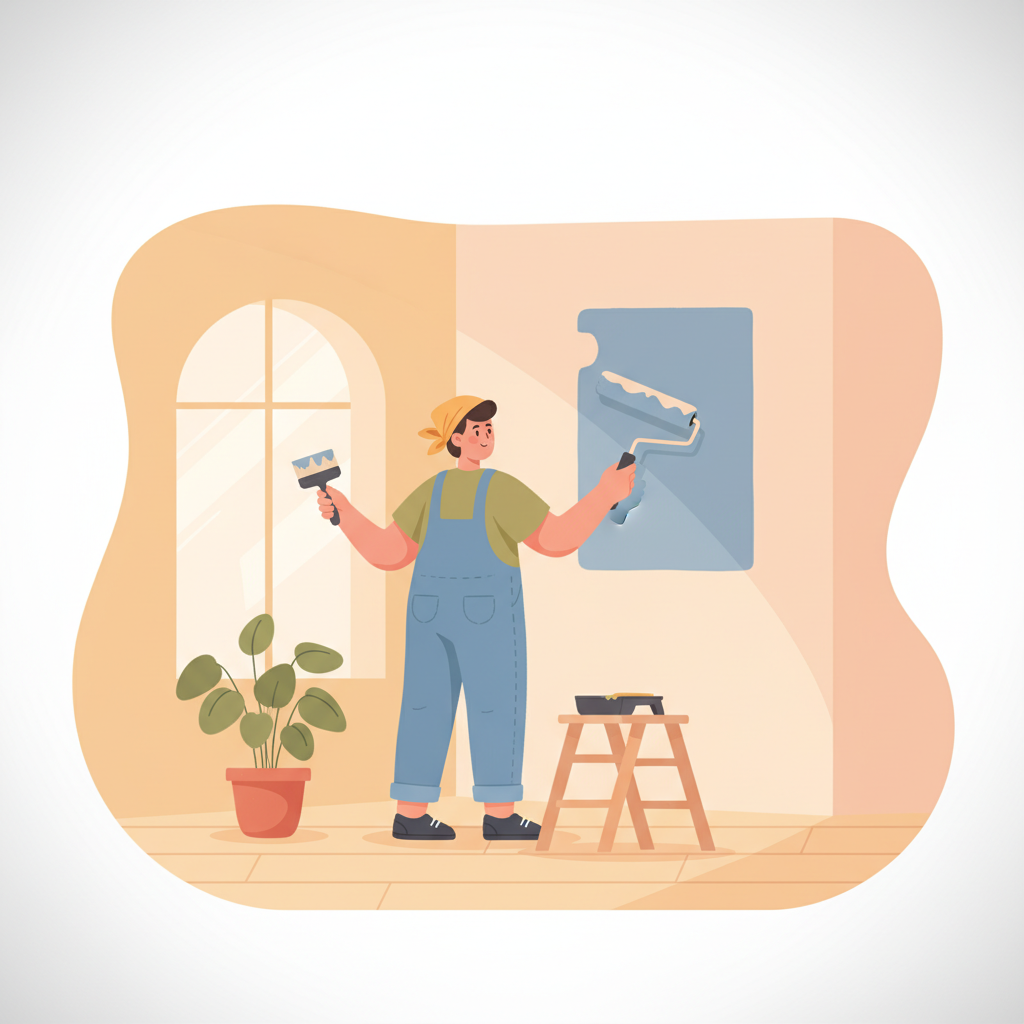
Refining your painting techniques can feel challenging, especially when you want your home renovation projects to look truly professional. Avoiding common mistakes and gaining confidence in your skills are key to transforming your space effectively.
The good news is that mastering painting is achievable through simple daily habits. These small, consistent practices build your skills and help you develop an easy, effective painting workflow that guarantees smooth, clean finishes every time.
In this article, you’ll discover three daily habits that will help you refine painting techniques with achievable steps. You’ll gain expert-level tips that are easy to implement and will give your renovation projects a flawless finish.
Your 3 Daily Habits to Refine Painting Techniques
Habit 1 — Prep Like a Pro
Why: Proper preparation underpins all great paint jobs. Without it, paint won’t stick well, and the finish looks uneven.
How: Spend time cleaning the surface, sanding rough spots, and applying primer if needed. Make this a daily review habit before painting sessions to ensure surfaces are perfectly ready.
Cue: Right before you get your brushes and rollers, take 10 minutes to inspect and prep the area.
Habit 2 — Practice Cutting In Techniques
Why: “Cutting in” the edges with a brush is tough but essential for neat lines and pro results.
How: Each day, dedicate short practice time cutting in along door frames, ceilings, or baseboards. Use an angled brush and steady your hand by resting your pinky on the wall. Regularly practicing this builds your precision.
Cue: After prepping, grab your angled brush to work on a small edge section.
Habit 3 — Master Your Rolling Rhythm
Why: Rolling paint consistently avoids drips, lap marks, and uneven texture.
How: Focus on loading your roller evenly and painting in long vertical strokes with slight overlap, keeping a wet edge to prevent streaks. Daily painting sessions on small wall sections help build muscle memory.
Cue: When you start painting a new wall surface, remind yourself to slow down and focus on your stroke technique.
Week 1 Schedule
| Day | Focus | Task |
|---|---|---|
| Monday | Prep and Clean | Inspect and clean a paint surface area, sand minor imperfections, apply primer if needed. |
| Tuesday | Cutting In Practice | Practice painting straight edges on small sections of trim or wall corners using an angled brush. |
| Wednesday | Rolling Technique | Paint a small section of wall with a focus on smooth, overlapping roller strokes keeping wet edge. |
| Thursday | Combined Practice | Prep and paint a small wall area starting with cutting in edges and finishing with rolling paint. |
| Friday | Review & Adjust | Check your work for drips, lap marks, or texture issues; sand and touch up as needed. |
| Saturday | Speed and Flow | Time yourself painting a wall section to practice maintaining a smooth rhythm without rushing. |
| Sunday | Rest and Reflect | Rest day. Reflect on progress and plan next week’s painting goals. |
Troubleshooting
Barrier: Paint drying too fast causing lap marks.
Fix: Refine painting techniques by maintaining a wet edge and loading the roller adequately to avoid dry spots.
Barrier: Uneven paint texture near edges.
Fix: Practice daily cutting in with an angled brush and immediately blend the edges with a small roller for uniform texture.
Barrier: Paint peeling or chipping after drying.
Fix: Always clean and prime surfaces before painting to ensure paint adhesion and durability.
FAQs
Q: How can I avoid lap marks while painting walls?
A: To refine painting techniques and avoid lap marks, keep a wet edge by overlapping strokes before paint dries and reload your roller often.
Q: What is the best order to paint a room?
A: Paint the trim first, then the ceiling, and finally the walls. This order helps with neat taping and smoother workflow.
Q: How often should I sand between paint coats on trim?
A: Sand the trim lightly between coats to get an ultra-smooth finish, usually waiting at least 24 hours for the paint to dry first.
Tracking & Motivation Tips
Track your progress with a simple checklist or a painting journal where you note the habits practiced each day. Celebrate small wins like a perfectly straight cut-in line or even roller strokes. Motivation increases as you see your skills improve and your project come to life.
Key Takeaways to Refine Painting Techniques
Refining painting techniques is fully within reach by adopting focused daily habits that build your skills gradually. Proper prep work, practicing cutting in, and mastering your rolling rhythm are foundational to flawless paint jobs. Through consistency and reflection, you will gain confidence and see measurable improvement in every project.