
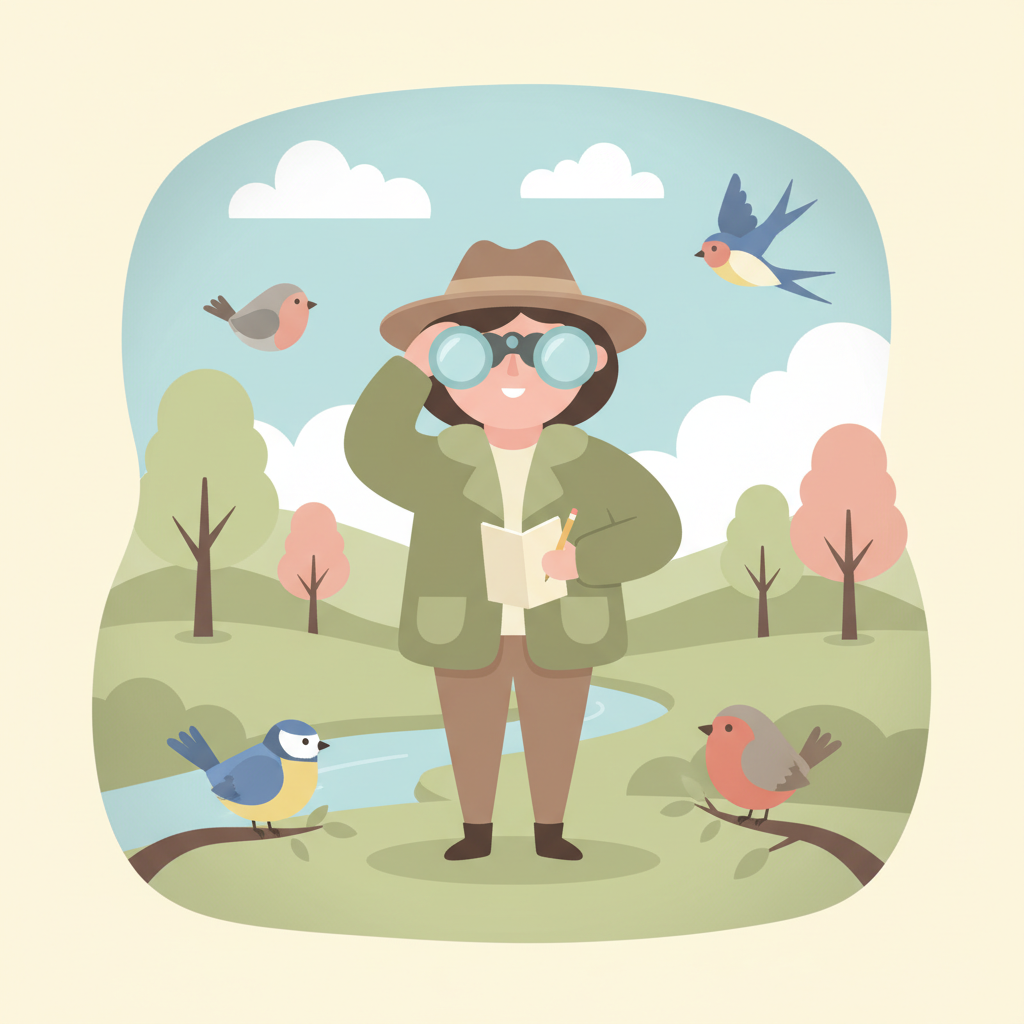
As a nature guide, learning native bird calls can feel like a big mountain to climb. Birds don’t come with visible name tags, and their songs can be complex and varied, making it hard to identify who’s singing in the trees.
But here’s the good news: learning native bird calls is totally doable with just a few simple daily habits. You don’t need to spend hours in the field or have perfect pitch. Instead, you can build easy audio recognition habits that fit into your daily routine and gradually sharpen your ear.
By developing these supportive habits, you will not only enhance your bird identification skills but also deepen your connection to the natural world, becoming a more confident and effective guide for others on the trail.
Your 3 Daily Habits to Learn Native Bird Calls
Habit 1 — Combine Sight and Sound Learning
Why: Pairing what you see with what you hear creates a stronger memory link for bird identification. Your brain connects the bird’s image to its unique call, making it easier to recognize later.
How: When you spot a bird singing, take a moment to watch and listen closely. Try repeating its distinctive call or song softly to yourself. Using an app like Merlin Bird ID can help confirm your observations.
Cue: When you see a bird perched or fluttering, focus on its song immediately.
Habit 2 — Daily Listening Practice
Why: Consistent exposure to bird sounds helps your brain pick up on subtle differences in rhythm, pitch, and tone among various species.
How: Dedicate 5–10 minutes daily to listen to recordings of native bird calls. Use resources like the All About Birds website, Macaulay Library, or Merlin Bird ID app to play familiar local birds’ songs during quiet moments, like morning coffee or a walk.
Cue: Set a reminder each day to play bird call recordings during a relaxed moment.
Habit 3 — Use Mnemonics to Remember Calls
Why: Mnemonics transform complex sounds into memorable phrases, helping you recall bird calls more easily.
How: Learn the catchy phrases people use to describe bird songs. For example, the Barred Owl sounds like “Who cooks for you all?” Practice repeating these fun memory hooks alongside the actual calls.
Cue: When you listen to a new call, think of or create a mnemonic phrase that matches its rhythm and tone.
Week 1 Schedule
| Day | Plan |
|---|---|
| Monday | Spot and listen carefully to a singing bird on a daily walk |
| Tuesday | Listen to 5 bird calls using the Merlin app during morning routine |
| Wednesday | Practice repeating mnemonics for 3 bird calls you learned so far |
| Thursday | Combine watching a bird with listening and mimicking its song briefly |
| Friday | Play bird call recordings during quiet time to reinforce sounds |
| Saturday | Join a local birdwatching group or a field trip if possible to learn from others |
| Sunday | Review the week by listening to bird calls and testing your recognition |
Troubleshooting
Barrier: Overwhelmed by too many bird sounds at once.
Fix: Focus on one bird sound at a time. Pick a familiar call and try to isolate it before moving to others.
Barrier: Difficulty recalling bird calls despite listening.
Fix: Use mnemonics to create mental shortcuts that stick easier in memory.
Barrier: Not having access to real birds often.
Fix: Use high-quality audio apps like Merlin Bird ID for daily listening practice anytime, anywhere.
FAQs
Q: How long does it take to learn common native bird calls?
A: With consistent daily habits, you can start recognizing key bird calls within a few weeks. Mastery grows over months.
Q: Are there good apps to help me learn native bird calls?
A: Yes, apps like Merlin Bird ID are excellent for learning and identifying bird calls and songs in real time.
Q: Can I learn bird calls without seeing the birds?
A: Absolutely. Listening practice strengthens your skill, but combining calls with sight makes learning faster.
Tracking & Motivation Tips
Keep a simple notebook or app log of new bird calls you learn. Note down the day and bird name if known. Reviewing your log regularly boosts motivation and shows your progress. Celebrate small wins like recognizing a new call during walks or sharing a correct ID with others.
Key Takeaways to Learn Native Bird Calls
Learning to learn native bird calls is easier when you build daily habits that fit naturally into your life. Pair seeing birds with listening, practice daily with recordings, and use mnemonics to make the sounds memorable. Small, consistent steps help you become a confident sound-spotter and enrich your nature guiding.