
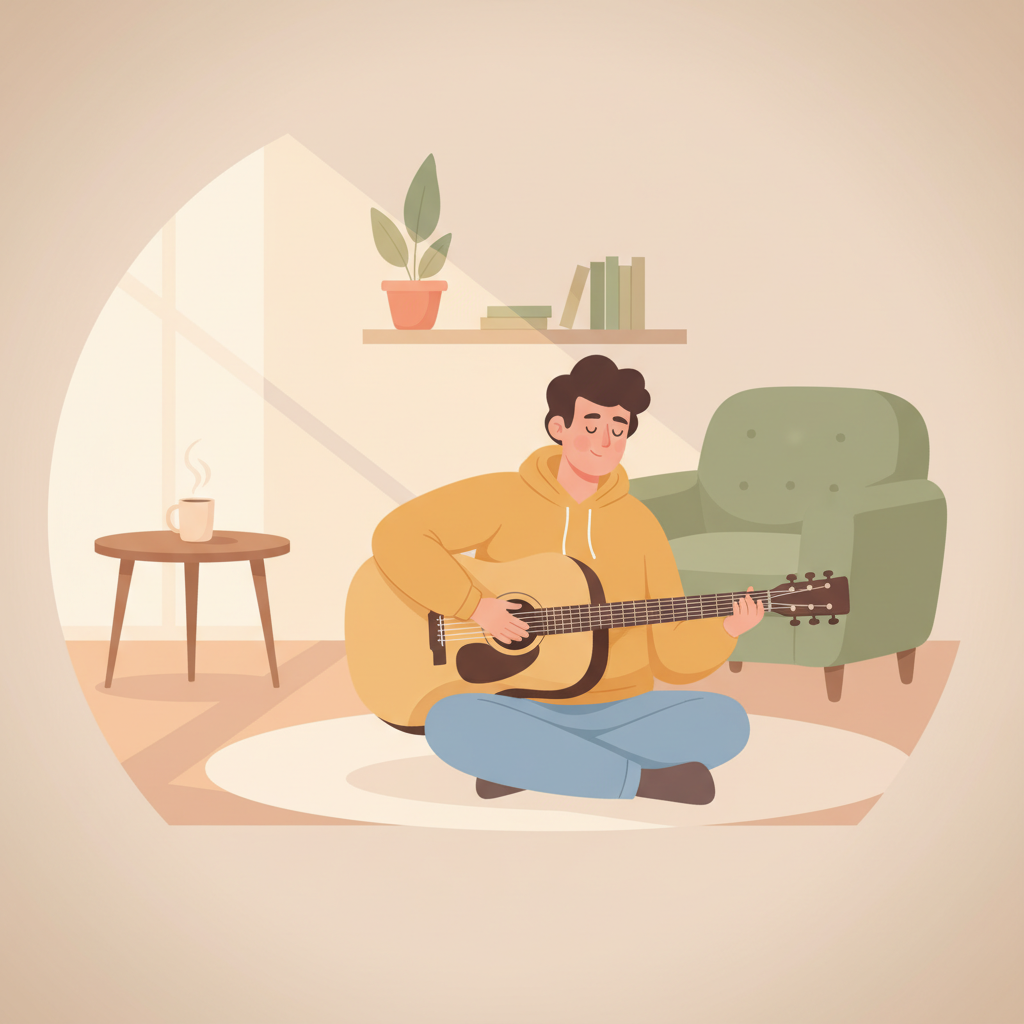
If you are a music learner, you know that performance anxiety can sneak up at the worst moments, making your hands tremble and your mind race with worries. This common stress can cloud your joy and hold back your progress.
Fortunately, you can manage and reduce performance anxiety with simple daily habits designed to calm your mind and body. These habits act gently but powerfully to build your confidence over time, giving you more freedom to express your musical self.
In this article, we’ll explore practical, easy-to-follow daily habits that music learners like you can start today to reduce performance anxiety and enjoy playing music with more ease and joy.
Your 3 Daily Habits To Manage Performance Anxiety Music
Habit 1 — Mindful Breathing Practice
Why: Performance anxiety music often triggers physical symptoms like shortness of breath and muscle tension. Mindful breathing helps calm your nervous system, reducing these symptoms and helping you stay grounded.
How: Spend 5 minutes each day sitting quietly focusing on slow, deep breaths. Inhale through your nose for 4 counts, hold briefly, then exhale slowly through your mouth for 6 counts. Let your belly rise and fall with each breath.
Cue: Set a daily reminder first thing in the morning or before practice to sit for your breathing exercise.
Habit 2 — Positive Self-Talk and Visualization
Why: Negative thoughts like “I’ll mess up” increase anxiety. Replacing them with positive affirmations and visualizing success rewires your mind to build confidence.
How: Every day, take a minute to silently tell yourself encouraging phrases such as “I am prepared and capable” or “I enjoy sharing my music.” Pair this with a mental image of yourself performing successfully and relaxed.
Cue: Do this right before practicing your instrument or before sleep.
Habit 3 — Consistent Exposure Through Deliberate Practice
Why: Avoidance worsens anxiety. Regularly practicing performing—even just in front of a mirror or a friend—builds familiarity and decreases fear.
How: Schedule short daily sessions where you simulate performance conditions. This could be playing through your pieces aloud, recording yourself, or performing for family.
Cue: Incorporate into your daily practice routine, setting small, achievable goals.
Week 1 Schedule
| Day | Mindful Breathing | Positive Self-Talk & Visualization | Deliberate Practice Session |
|---|---|---|---|
| Monday | 5 min morning | 1 min before practice | 10 min play aloud |
| Tuesday | 5 min before practice | 1 min before sleep | Record 5 min |
| Wednesday | 5 min morning | 1 min before practice | Perform for friend |
| Thursday | 5 min before practice | 1 min before sleep | Play through tough spots |
| Friday | 5 min morning | 1 min before practice | Full playthrough |
| Saturday | 5 min before practice | 1 min before sleep | Play for family |
| Sunday | 5 min morning | 1 min before practice | Rest or gentle play |
Troubleshooting
Barrier: Forgetting to do daily mindful breathing exercises.
Fix: Use phone reminders or apps to prompt your daily breathing practice to build consistent routine with your performance anxiety music habits.
Barrier: Negative thoughts persist despite positive self-talk.
Fix: Journal your worries separately then consciously replace them with positive statements. Repetition strengthens new thought patterns.
Barrier: Anxiety feels worse when trying deliberate practice performances.
Fix: Start very small—perform for just yourself in a private space first, gradually increasing exposure as confidence builds.
FAQs
Q: How soon can I expect to feel less performance anxiety after starting these habits?
A: Many music learners notice subtle improvements within the first week, especially from mindful breathing. Consistent practice over several weeks builds lasting confidence.
Q: Can these habits help with anxiety right before a live performance?
A: Absolutely. Use mindful breathing and positive self-talk as on-the-spot tools to calm nerves and shift your mindset during performance anxiety music moments.
Q: What if I skip a day or two? Will it ruin my progress?
A: It is normal to miss days occasionally. Just resume your daily habits as soon as possible. Consistency over time is what really makes the difference.
Tracking & Motivation Tips
Keep a simple log of when you do each daily habit. Note your feelings before and after practice sessions to observe how performance anxiety music improves over time. Celebrate small wins to boost motivation!
Key Takeaways About Performance Anxiety Music and Daily Habits
Reducing performance anxiety music is achievable through three simple daily habits: mindful breathing to calm your body, positive self-talk and visualization to retrain your mind, and deliberate practice to build confidence. These habits are easy to implement, effective, and empower you to enjoy greater ease when performing. Remember, anxiety is common but manageable with consistent care and mindful practice.