
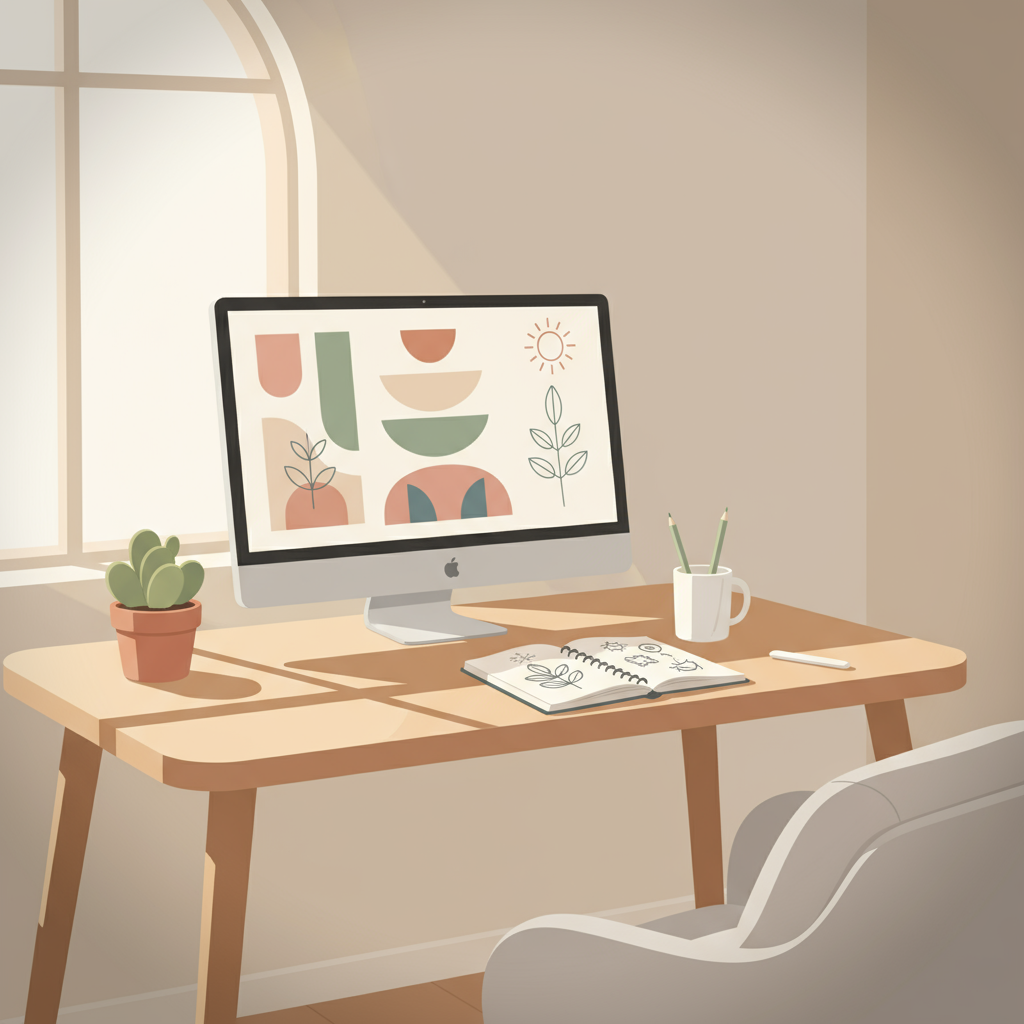
Many graphic artists aspire to master minimalist design but find it hard to consistently practice this skill amid busy schedules and competing priorities.
Fortunately, establishing simple daily habits focused on intentional creativity and purposeful work can make minimalist design practice approachable and effective.
In this article, you will discover three practical daily habits tailored for graphic artists that will help you grow your minimalist design skills step by step, turning complexity into clarity.
Your 3 Daily Habits For Minimalist Design Practice
Habit 1 — Daily Focused Design Sessions
Why: Regular, focused practice helps you internalize minimalist design principles and improves your ability to intentionally simplify complex visuals.
How: Block out 30 to 45 minutes each day to work on a small minimalist design project or experiment with design elements such as typography, color palettes, and negative space.
Cue: Set a calendar reminder or schedule this time as a non-negotiable meeting with yourself, ideally at a time when your mind is fresh, like early morning or after a break.
Habit 2 — Intentional Sketching and Idea Journaling
Why: Sketching and journaling allow you to explore minimalist concepts without pressure, fostering creative thinking and visual problem solving.
How: Keep a dedicated notebook or digital app handy to sketch minimalist logo ideas, layouts, or jot down notes about negative space, hierarchy, and functionality.
Cue: Use transitional moments such as waiting in line or commuting to capture quick ideas and reflections that can fuel your design sessions.
Habit 3 — Review and Reflect on Your Work
Why: Regularly reviewing your designs helps you recognize areas to simplify further and balance aesthetics with function.
How: At the end of each week, spend 10 minutes looking back at your daily works, note what worked well, and identify which elements can be minimized or refined.
Cue: Tie this reflection habit to a fixed weekly event, like Sunday evening or Friday afternoon, making it part of your creative routine.
Week 1 Schedule
| Day | Focused Design Session | Sketching & Journaling | Review & Reflect |
|---|---|---|---|
| Monday | Create a minimalist poster focusing on negative space | Sketch 3 logo ideas in notebook | — |
| Tuesday | Experiment with monochromatic color palettes | Write notes on color impact in design | — |
| Wednesday | Practice typography hierarchy with different fonts | Sketch web page layouts | — |
| Thursday | Design a minimalist icon set | Journal thoughts on simplicity versus functionality | — |
| Friday | Combine elements into a cohesive branding concept | Sketch client mood board ideas | — |
| Saturday | Revise and simplify designs created earlier in the week | Jot down feedback received from peers or self | — |
| Sunday | — | — | Reflect on the week’s progress and plan next week’s focus |
Troubleshooting
Barrier: Finding uninterrupted time to practice daily.
Fix: Treat your minimalist design practice sessions like important appointments. Schedule them early and protect them from interruptions by informing those around you.
Barrier: Feeling stuck or uninspired when trying to create minimalist work.
Fix: Use your sketching and journaling habit to jot down every idea, no matter how small. Try to explore different minimalist styles or revisit classic minimalist designs for inspiration.
Barrier: Doubting if your designs are truly minimalist or over-simplified.
> Fix: Use your weekly review ritual to compare your work against minimalist design principles such as purposeful use of space, clear hierarchy, and functional simplicity.
FAQs
Q: How long should my daily minimalist design practice be?
A: Starting with 30 minutes daily is plenty to create meaningful progress. Consistency over long durations matters more than session length.
Q: What if I miss a day of practice?
A: Missing a day is normal. Just resume the next day without guilt. Maintaining the habit over time is key to success.
Q: How do I avoid making my minimalist designs look too plain or unfinished?
A: Focus on intentionality. Every element you include should have a purpose. Use contrast, hierarchy, and thoughtfully chosen typography to add visual interest.
Tracking & Motivation Tips
Keep a simple log or checklist to mark off your daily minimalist design practice. Seeing your progress builds momentum and accountability. Sharing your work on social platforms or with peers can also encourage motivation by inviting feedback and support.
Key Takeaways For Minimalist Design Practice
Developing a minimalist design practice is all about building consistent, intentional habits. By dedicating daily focused time, capturing ideas regularly, and reflecting on your progress, you can steadily improve your skills and create impactful minimalist designs that balance simplicity with function.