
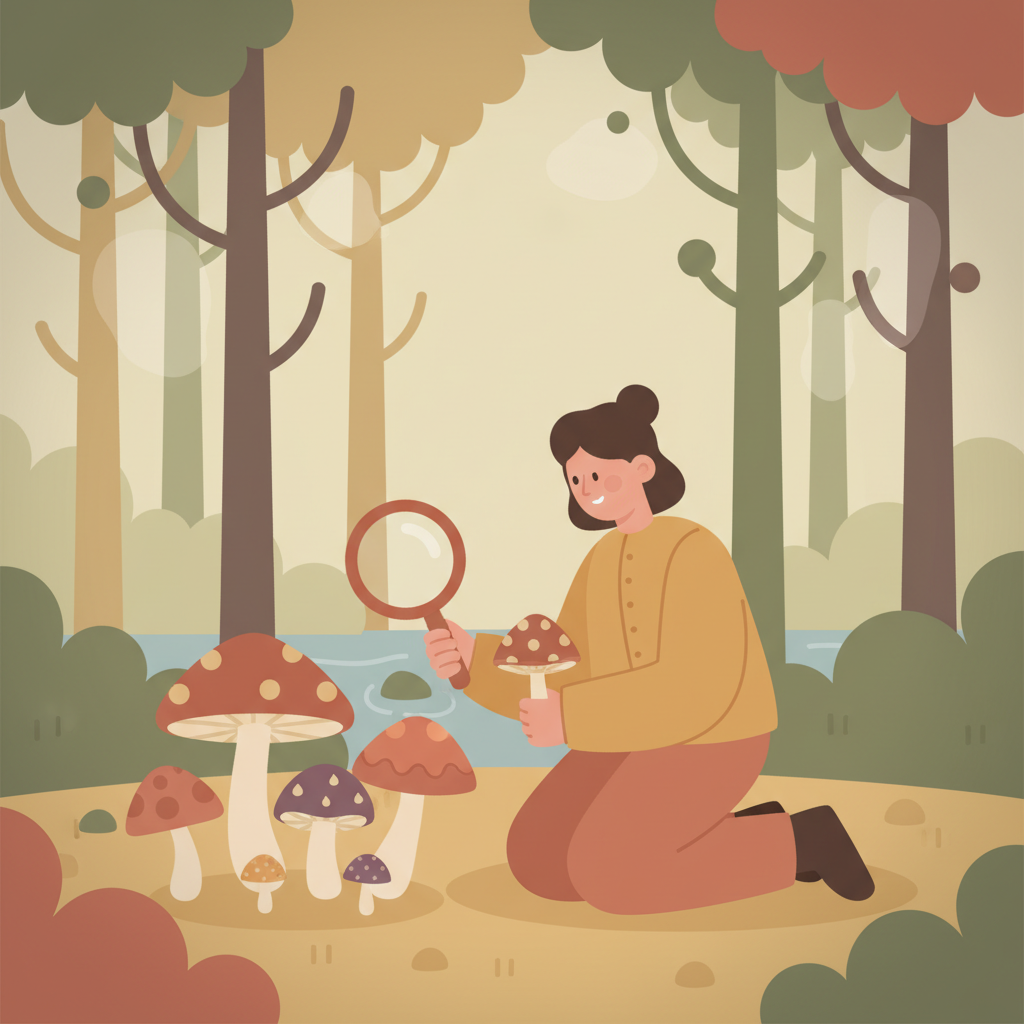
Have you ever wandered through the forest, curious about the tiny fungi peeking out from the ground or fallen wood, wondering which ones are edible or just fascinating to observe? For many foragers, the challenge is not just finding mushrooms but confidently spotting and identifying different fungal varieties.
Fortunately, this journey to mushroom mastery does not have to be overwhelming. With simple daily habits grounded in learning, observation, and safety, you can steadily grow your fungi spotting skills. These habits focus on sharpening your attention to key clues, deepening your understanding of fungal anatomy, and connecting with resources and communities.
By adopting easy-to-follow daily habits, you will unlock the mysteries of fungal varieties, enjoy richer experiences in nature, and keep your foraging adventures safe and rewarding.
Your 3 Daily Habits for Spotting Fungal Varieties
Habit 1 — Study A Species Deeply Each Day
Why: Spot fungal varieties with confidence by focusing on one or two mushrooms at a time instead of trying to identify every mushroom around you. Deep study helps you build strong mental models.
How: Pick one beginner-friendly species common in your region and delve into its details: cap shape and color, stem characteristics, gill or pore structure, smell, and typical habitat. Use a trusted field guide to help.
Cue: Set a reminder to study a mushroom entry or photo each morning or evening for 10 minutes.
Habit 2 — Take Daily Nature Walks With Focused Observation
Why: Regular walks train your eye to spot subtle fungal features, different growth patterns, and seasonal changes.
How: Spend 15–20 minutes walking in a local wooded area or park. Look closely at the ground, under trees, and logs. Note patterns of fungi growing saprophytically or mycorrhizally. Photograph interesting finds.
Cue: Pair your walk with daily fresh air or exercise time for a natural cue.
Habit 3 — Connect With A Mushroom Foraging Community
Why: Communities offer support, shared knowledge, and identification help to enhance your learning and safety.
How: Join a Facebook mushroom foraging group or a local mycological society. Post photos of your finds, ask questions, and participate in forays or group outings.
Cue: Schedule a weekly check-in to interact online or attend a monthly group event.
Week 1 Schedule
| Day | Activity |
|---|---|
| Monday | Choose a beginner mushroom species to study using a field guide. |
| Tuesday | Take a 15 min walk to observe fungi; note habitat and mushroom features. |
| Wednesday | Join an online mushroom foraging group and introduce yourself. |
| Thursday | Review the species details again and compare with photos from your area. |
| Friday | Go on another focused walk, take photos, and post one find to your group for feedback. |
| Saturday | Practice making a spore print at home from any identified mushrooms. |
| Sunday | Reflect on what you learned this week, update your notes, and plan for next week. |
Troubleshooting
Barrier: Feeling overwhelmed by the vast number of mushroom species and identification details.
Fix: Spot fungal varieties more easily by narrowing your focus to one or two beginner species per week and gradually expanding your knowledge.
Barrier: Difficulty finding local communities or feeling hesitant to ask questions.
Fix: Use online groups dedicated to your region or beginner foragers where people are welcoming and willing to help. Remember, everyone was a beginner once.
Barrier: Uncertainty about the safety of mushrooms found.
Fix: Spot fungal varieties safely by following the golden rule: if you are not 100% sure, do not consume. Always consult multiple resources and experts before eating any wild mushrooms.
FAQs
Q: How can I tell which mushrooms are safe to eat?
A: Spot fungal varieties safely by learning to identify species fully, knowing their poisonous lookalikes, and never eating unless identification is certain. Start with beginner-friendly species recommended by experts.
Q: How important is making a spore print?
A: Very important. Spore prints help narrow down species by color and are a key identification tool used by many foragers.
Q: Are foraging apps reliable for identification?
A: Use apps cautiously. They can be helpful, but misidentifications are common. Always double-check with field guides and expert communities.
Tracking & Motivation Tips
Spot fungal varieties becomes easier when you track your daily habits. Keep a simple journal or use an app to log species studied, walks taken, and photos posted. Reviewing your progress boosts motivation and reveals your growing expertise. Celebrate small wins like confidently identifying a new mushroom or receiving positive feedback from your foraging community.
Key Takeaways for Spotting Fungal Varieties
Spot fungal varieties confidently by adopting achievable, focused daily habits. Learn deeply about a few species at a time, develop a regular nature observation routine, and connect with fellow foragers for shared support and learning. Patience and persistence are your allies in this rewarding journey into the fascinating world of fungi.
Join the Waitlist
Ready to put these habits into action? Dayspire helps you reach any goal with simple daily habits. Join the waitlist now to be the first to get invited to Dayspire!