
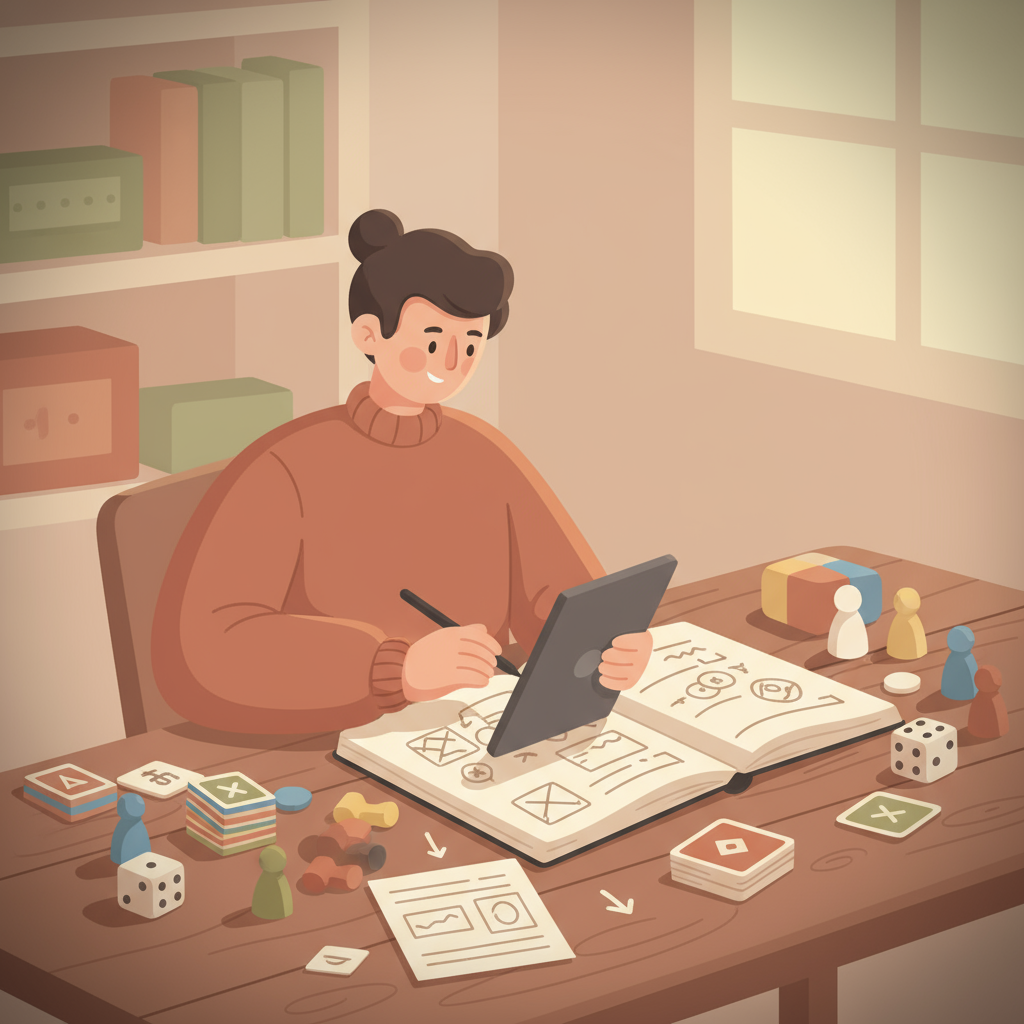
If you love board games and dream of creating your own original game, you might feel overwhelmed. Designing a game that is fun, unique, and playable can seem like a huge task.
Fortunately, with the right daily habits to cultivate creativity, organize your ideas, and test your designs, you can make steady progress toward your goal of creating a board game that others will enjoy.
In this article, we’ll explore simple, practical daily habits that board game fans can adopt to design original games effectively and enjoyably from concept to prototype.
Your 3 Daily Habits for Design Original Board Games
Habit 1 — Idea Generation and Reflection
Why: Generating fresh ideas daily feeds your creative reservoir and helps you design original board games.
How: Spend 10-15 minutes journaling new concepts, game themes, or mechanics that inspire you. Consider what experiences you want to capture or what unique twist you can add.
Cue: Do this habit shortly after waking or before starting your creative work for the day.
Habit 2 — Rapid Prototyping
Why: Quickly creating simple prototypes each day lets you test ideas, find issues early, and iterate designs efficiently.
How: Set aside 15-20 minutes to craft a rough version of a game component or rule using inexpensive materials like paper, cards, or tokens. Test how it plays in a solo simulation or with friends.
Cue: Attach this habit to a regular daily activity such as after lunch or before dinner.
Habit 3 — Playtesting and Feedback Review
Why: Daily playtesting or reviewing feedback ensures your design stays player-focused and helps you refine mechanics and rules.
How: Play your prototype for a few minutes alone or with others, or thoroughly review notes from previous playtests. Note what works and what needs improvement.
Cue: Perform this habit at the end of your design session before closing it out for the day.
Week 1 Schedule
| Day | Habit 1 (Idea Generation) |
Habit 2 (Rapid Prototyping) |
Habit 3 (Playtesting & Review) |
|---|---|---|---|
| Monday | Brainstorm 5 themes or mechanics | Make rough card prototype | Play 1 round solo |
| Tuesday | Reflect on player experience desired | Create simple board layout | Test play with a friend |
| Wednesday | Note ideas to improve play | Mock up scoring system | Review feedback notes |
| Thursday | Draw inspiration from favorite games | Prototype a new rule | Self-play focusing on rule flow |
| Friday | Conceptualize unique game twist | Create sample player cards | Playtest with 2-3 players |
| Saturday | Research market trends or genres | Experiment with components | Synthesize weekly insights |
| Sunday | Rest and passive idea incubation | Light play or rule review | Plan next week’s focus |
Troubleshooting
Barrier: Feeling stuck with few new ideas.
Fix: Use habit 1 to ask yourself fresh questions like “What emotions do I want players to feel?” or “What core action should define each turn?” to unlock creativity for your design original board games.
Barrier: Prototypes take too long to make.
Fix: Focus on rough, disposable materials to maintain momentum rather than perfection. The goal is quick iteration, not polished pieces — making design original board games doable daily.
Barrier: Lack of testers or feedback.
Fix: Use solo playtesting or seek feedback from family and friends. Even brief daily tests offer insights that compound towards your goal to design original board games.
FAQs
Q: How often should I update my game based on daily habits?
A: Aim to incorporate small improvements daily or weekly from your playtesting and reflections to keep your project moving toward your goal to design original board games.
Q: Is it necessary to learn graphic design to create prototypes?
A: Not at first. Focus on gameplay and mechanics using simple drawings or placeholders. Once core gameplay is solid, you can collaborate with artists.
Q: How do I know if my game idea is original enough?
A: Originality comes from combining your unique experiences, themes, and mechanics. Many games share familiar elements but offer new twists. Playtesting will guide you.
Tracking & Motivation Tips
Use a simple journal or app to track daily progress on idea notes, prototypes made, and playtesting sessions. Celebrate small wins such as discovering fun mechanics or completing a prototype. This keeps motivation high and your design process on track to design original board games.
Key Takeaways for Design Original Board Games
Designing original board games is a rewarding journey achievable through consistent daily habits. Generating ideas, rapid prototyping, and regular playtesting create a powerful cycle of creativity and improvement. Embrace iteration, seek feedback, and stay curious to transform your ideas into engaging games others will love.
Join the Waitlist
Ready to put these habits into action? Dayspire helps you reach any goal with simple daily habits. Join the waitlist now to be the first to get invited to Dayspire!