
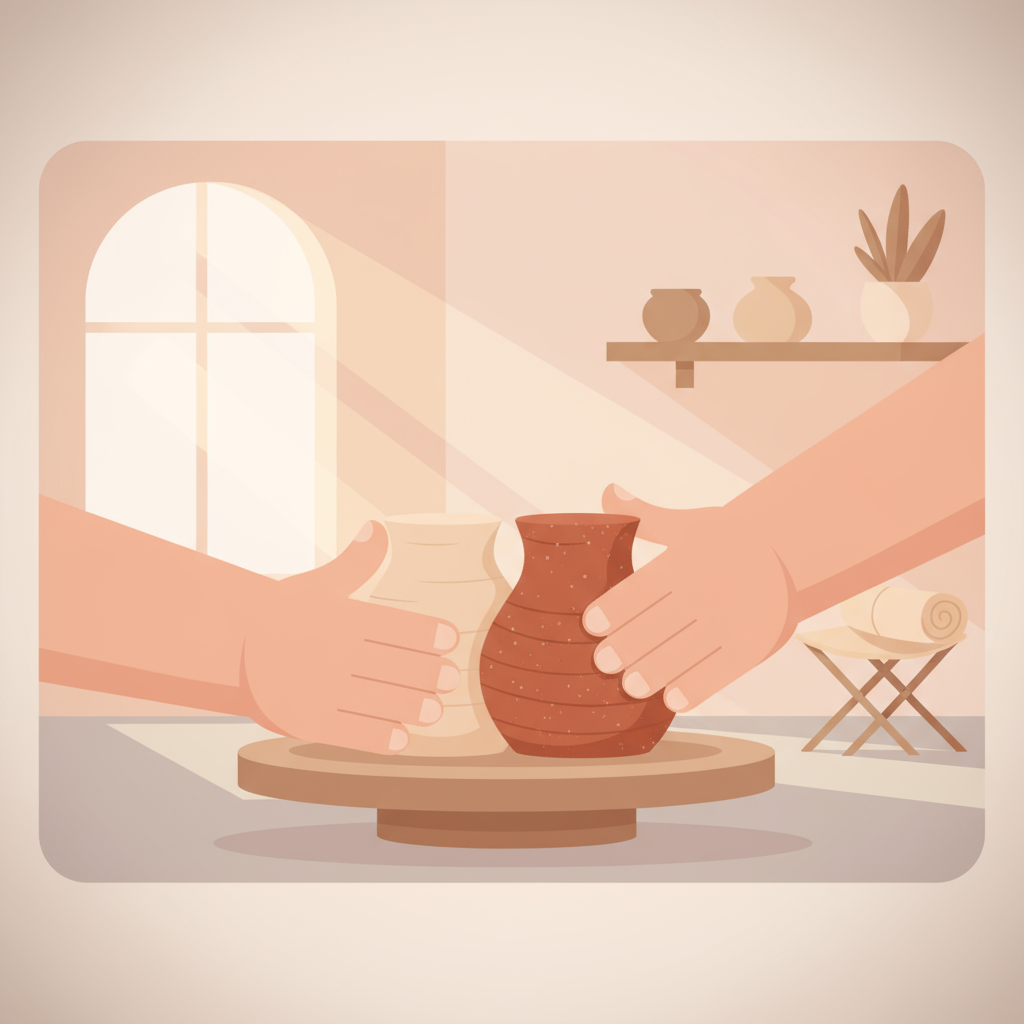
As a potter, one of the most rewarding yet challenging skills to master is developing a keen awareness of the texture of your clay. Understanding clay texture deeply influences how your creations look, feel, and hold together.
The good news is that you don’t need to become an expert overnight. By incorporating simple daily habits into your pottery routine, you can steadily enhance your clay texture awareness and improve the quality of your work.
In this article, you’ll discover three practical daily habits that are easy to adopt and will help you connect more with your clay every day. These habits are grounded in proven pottery tips and techniques shared by experienced potters.
Your 3 Daily Habits To Enhance Clay Texture Awareness
Habit 1 — Daily Wedging Practice
Why: Wedging your clay not only removes air bubbles but also helps you feel the clay’s moisture and texture changes firsthand. It improves plasticity and prepares the clay for shaping.
How: Set aside 10 minutes each day to wedge clay using different techniques like spiral or ram’s head wedging. Focus on the resistance and smoothness you feel.
Cue: Before beginning any pottery work each day, use wedging as your warm-up ritual.
Habit 2 — Texture Exploration Sessions
Why: Spending time with clay purely to explore its surface and texture sharpens your tactile sensitivity. This helps you notice subtle variations that affect your final piece.
How: Take 5-10 minutes each day to handle small clay samples. Experiment by pinching, smoothing, or adding grog to feel how texture and grit change the clay’s behavior.
Cue: After your wedging session, dedicate a few minutes to intentionally touch and explore different clay textures.
Habit 3 — Keep a Clay Journal
Why: Tracking your observations about clay texture, moisture, and how clay reacts during different stages helps build a mental library over time.
How: Write short daily notes on your clay’s texture, any challenges faced, and adjustments made (e.g., moisture level, wedging pressure). Include photos if possible.
Cue: At the end of your pottery time, reflect and jot down your texture insights in your journal.
Week 1 Schedule
| Day | Activity | Duration |
|---|---|---|
| Monday | Wedging practice + texture exploration | 15 minutes |
| Tuesday | Wedging practice + journal entry | 15 minutes |
| Wednesday | Texture exploration + clay handling | 15 minutes |
| Thursday | Wedging practice + texture exploration | 15 minutes |
| Friday | Wedging practice + journal entry | 15 minutes |
| Saturday | Longer clay handling and texture session | 20 minutes |
| Sunday | Review journal + reflect on texture progress | 15 minutes |
Troubleshooting
Barrier: Wedging feels tiring or tedious.
Fix: Turn wedging into a mindful exercise. Focus on your breathing and the feel of clay to make the experience more enjoyable while improving clay texture awareness.
Barrier: Difficulty noticing subtle texture differences.
Fix: Use clay with different additives like grog or sand to enhance texture variety. Compare smooth vs gritty clay side-by-side to train your tactile senses more effectively.
Barrier: Forgetting to keep journal notes.
Fix: Set a daily reminder and keep your clay journal handy in your pottery workspace to make tracking texture insights quick and easy.
FAQs
Q: How long does it take to notice improvement in clay texture awareness?
A: With consistent daily habits, many potters start noticing subtle improvements within a week or two, as your brain and hands become more sensitive to the clay texture.
Q: Can I practice these habits if I only hand-build and do not use a pottery wheel?
A: Absolutely! Wedging, texture exploration, and journaling are beneficial regardless of your pottery style and will enhance texture awareness for all techniques.
Q: What tools can help me better sense and control clay texture?
A: Aside from your hands, ribs for compressing clay, wire cutters for clean slicing, and texture tools like stamps or grog additives can help you better understand and manipulate clay texture during your practice.
Tracking & Motivation Tips
Track your clay texture awareness progress by recording daily experiences and insights in your clay journal. Note changes in how the clay feels during wedging or modeling, and any improvements in your work quality. Celebrate small wins by comparing earlier and recent pieces to see how your texture understanding has grown.
Key Takeaways To Enhance Clay Texture Awareness
Integrating daily habits like consistent wedging, focused texture exploration, and keeping a clay journal will gradually deepen your clay texture awareness. These simple practices develop your tactile connection to clay, leading to better control and more beautiful pottery outcomes. Remember, clay texture awareness is a skill that improves with patience and daily attention.