
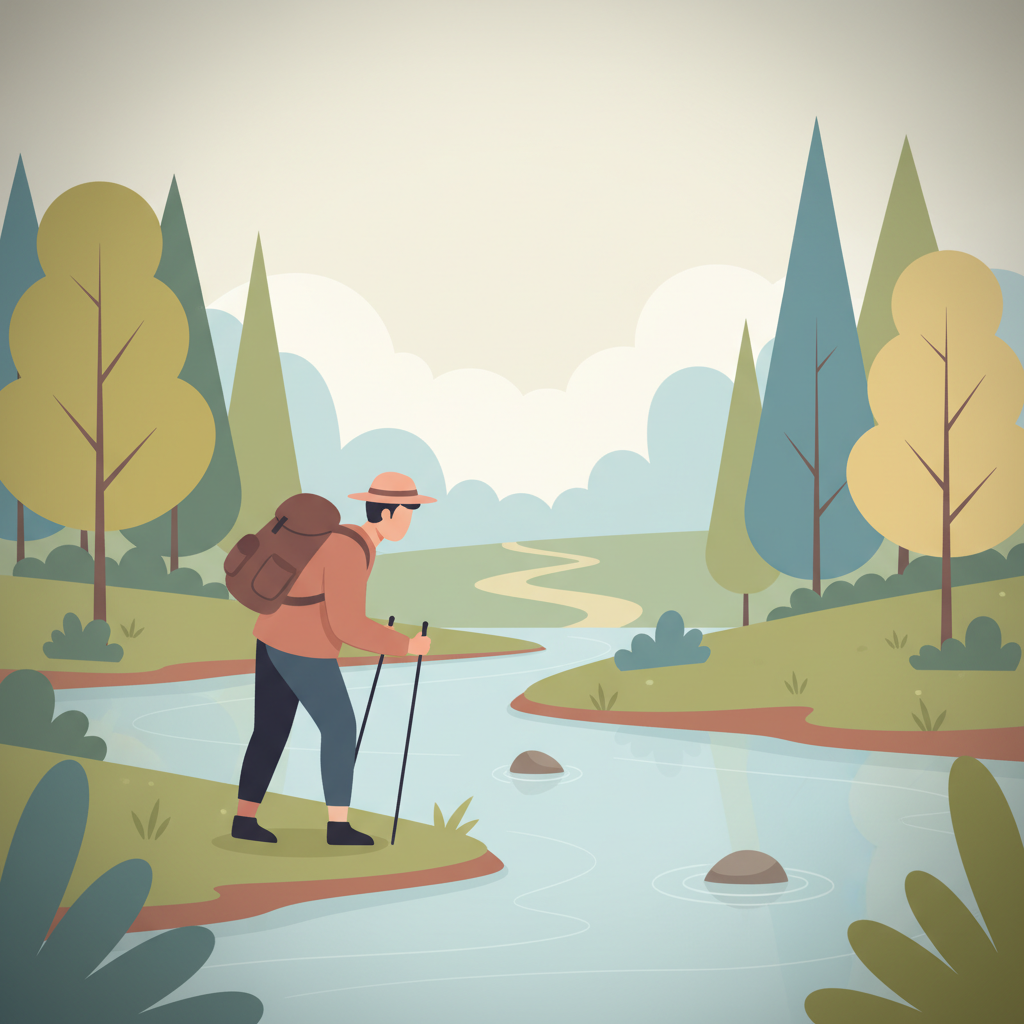
Crossing rivers is a thrilling part of exploring the wilderness, but the risks can be serious. Knowing where and how to cross safely can prevent injury or worse.
By adopting simple daily habits for assessing rivers and preparing yourself properly, you can confidently spot safe crossings on your walks and hikes. These habits build your river crossing skills steadily and safely.
This guide shares three easy daily habits that every river walker can use to find safe crossing points and enjoy their adventures with peace of mind.
Your 3 Daily Habits To Spot Safe River Crossings
Habit 1 — Scout and Assess Every River
Why: Getting into the habit of carefully scouting each river you plan to cross helps you learn to spot hazards like swift currents, deep spots, or underwater obstacles. This sharpens your ability to choose safer crossings.
How: Spend time walking along the riverbank upstream and downstream to observe water speed, depth, and surface conditions before crossing. Toss sticks or small rocks into the water to gauge current speed and depth.
Cue: When you reach a river or stream during your walk or hike, pause for a few minutes to examine it before you step in.
Habit 2 — Practice Safe Gear Preparation
Why: Being ready with proper gear every time reduces risk while crossing and protects your body and belongings from water hazards.
How: Use waterproof bags for your essentials and pack quick-dry clothing. Carry a sturdy stick or trekking poles for balance. Keep a spare pair of shoes handy for after crossing.
Cue: Before beginning your river crossing portion of a trip, check your gear setup and prepare your crossing tools.
Habit 3 — Time Your Crossings Smartly
Why: Rivers change with weather and time of day. Crossing at safer, lower water times greatly decreases danger.
How: Learn the local river patterns. Cross early in the morning or after dry spells when water is lower and currents are slower. Avoid crossing after heavy rains or during warm daytime melts.
Cue: Check river conditions and time before you decide to cross, making it part of your routine outdoor planning.
Week 1 Schedule
| Day | Action |
|---|---|
| Day 1 | Identify a local stream or river to observe. Walk along it, noting flow and hazards. |
| Day 2 | Practice packing gear with waterproof bags and include a walking stick or poles. |
| Day 3 | Check local river or stream flow reports or weather updates to pick safer crossing times. |
| Day 4 | Combine scouting with gear prep on a short hike near a water crossing. |
| Day 5 | Practice crossing techniques in shallow streams using your trekking pole for balance. |
| Day 6 | Review what cues helped find the safest crossing spots. Reflect and note improvements. |
| Day 7 | Plan a longer hike including a river crossing, applying all three daily habits. |
Troubleshooting
Barrier: Difficulty judging water speed and depth.
Fix: Use sticks or small rocks daily to practice estimating current speed and river depth safely.
Barrier: Forgetting to prepare gear for water crossings.
Fix: Create a checklist for outdoor trips that includes waterproofing essentials and trekking poles to reinforce the habit.
Barrier: Unpredictable river conditions leading to missed cues.
Fix: Check local river conditions and weather reports before outings. Build habit of timing crossings in safer periods.
FAQs
Q: How can I tell if a river is too dangerous to cross?
A: Spot safe river crossings by observing if water flows faster than you can walk, if it is deeper than your knees, or if you see hazards like rapids or debris. If unsure, never cross.
Q: What should I do if I lose my footing in the water?
A: If swept off balance, roll onto your back, keep feet pointed downstream to use them as rudders, and try to float to the riverbank safely.
Q: Is it better to cross rivers barefoot or with shoes?
A: Keep sturdy shoes or boots on whenever possible for protection and traction. Crossing barefoot increases risk of cuts and slips.
Tracking & Motivation Tips
Track your progress in spotting safe river crossings by journaling observations daily. Note the cues you find helpful and the gear setups that keep you steady. Celebrate successes like confidently choosing safe spots or completing crossings safely. This will reinforce your daily habits and build your confidence.
Key Takeaways For Spotting Safe River Crossings
Spot safe river crossings by developing simple daily habits: carefully scouting rivers before crossing, preparing reliable gear for balance and protection, and timing your crossings when water levels are safest. These habits make riverwalking safer and more enjoyable. Remember, no crossing is worth risking your life—always prioritize safety and be ready to turn back.
Join the Waitlist
Ready to put these habits into action? Dayspire helps you reach any goal with simple daily habits. Join the waitlist now to be the first to get invited to Dayspire!