
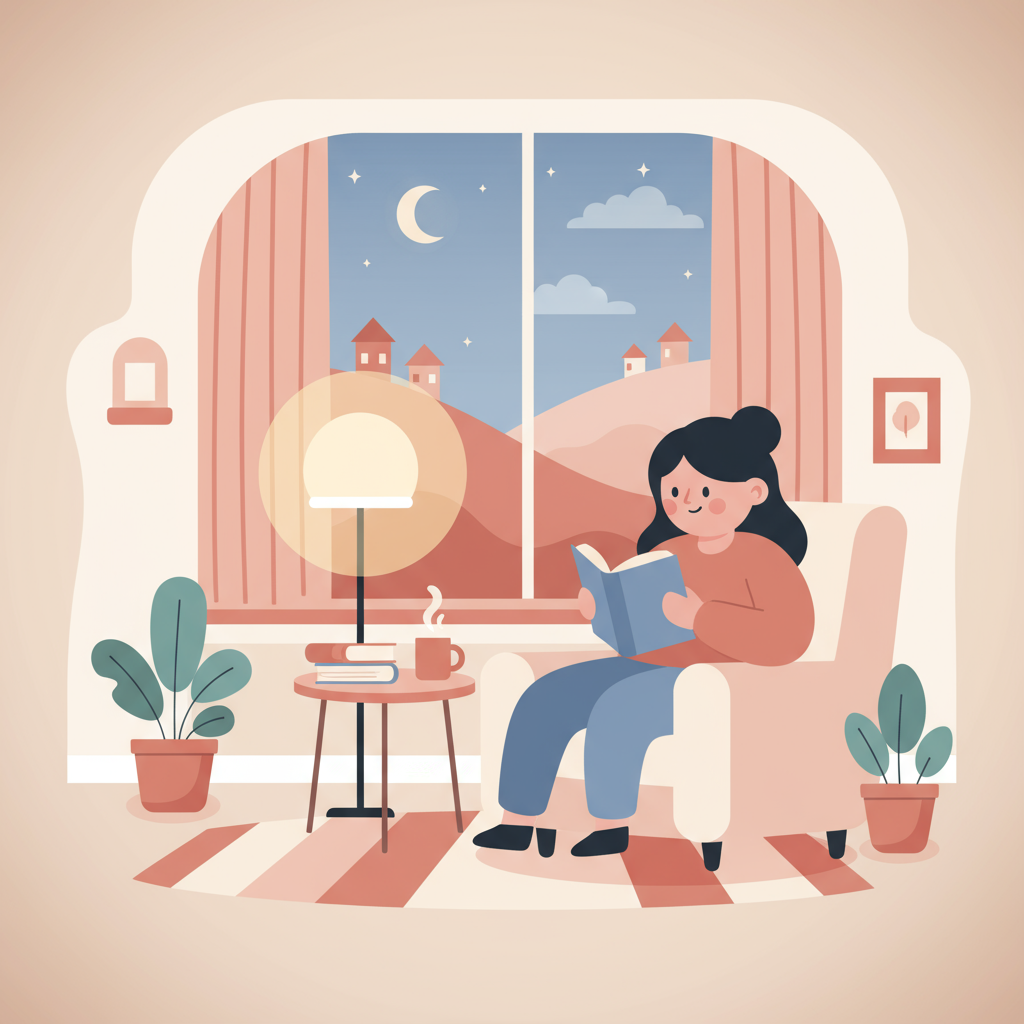
Are you a morning lark who feels restless or wired during your evenings? Many morning people find it challenging to switch off and truly relax in the evening, even though they rise early and are productive during the day.
Fortunately, managing evening relaxation is possible through simple daily habits tailored to your natural rhythm. By understanding how your body signals relaxation and sleep readiness, you can create an evening routine that helps you unwind effectively.
In this article, you will discover practical, science-backed habits that will help you transition smoothly into peaceful evenings and restful nights, supporting your well-being as a morning lark.
Your 3 Daily Habits to Manage Evening Relaxation
Habit 1 — Digital Detox and Light Management
Why: Managing your exposure to blue light and screen time helps your body produce melatonin, the hormone that signals it’s time to sleep, enhancing your ability to relax.
How: Aim to stop using digital devices at least 1-2 hours before bedtime. Dim your household lights in the evening to create a calm environment signaling your brain to wind down.
Cue: After dinner, turn off TVs, smartphones, and computers, and switch to warm lighting or candles.
Habit 2 — Gentle Evening Movement
Why: Light physical activity in the evening, like gentle yoga or stretching, helps relieve the physical tension built up during the day and promotes relaxation.
How: Allocate 15-20 minutes of calming exercises such as restorative yoga or simple stretching focused on breath control.
Cue: Perform this routine about 1-2 hours before your intended bedtime, ideally after dinner.
Habit 3 — Evening Journaling or Mindfulness Practice
Why: Reflecting on your day or practicing mindfulness can clear your mind from lingering worries or stress, making it easier to relax.
How: Spend 10 minutes writing down thoughts, gratitude, or your to-do list for the next day. Alternatively, try guided meditation or deep breathing exercises.
Cue: Dedicate time in your bedroom or a comfy corner after your gentle movement routine, signaling it’s time to slow down mentally.
Week 1 Schedule
| Time | Activity |
|---|---|
| After Dinner (approx. 7 PM) | Digital detox: turn off screens, dim lights |
| 7:30 PM | Gentle yoga or stretching (15-20 mins) |
| 8:00 PM | Evening journaling or mindfulness (10 mins) |
| 9:00 PM | Prepare bedroom for sleep (cool, dark, quiet) |
| 9:30 PM | Bedtime for restful sleep |
Troubleshooting
Barrier: Difficulty resisting phone or TV use in the evening.
Fix: Set a timer or alarm as a reminder to start your digital detox early to manage evening relaxation effectively.
Barrier: Feeling too energized after work to do gentle exercise.
Fix: Try light stretching instead of yoga or perform breathing exercises to ease into relaxation.
Barrier: Racing thoughts make journaling or meditation challenging.
Fix: Use guided meditation apps or keep journal prompts simple, focusing on gratitude or positive moments.
FAQs
Q: How important is it to avoid screens for managing evening relaxation?
A: It is very important because exposure to blue light from screens inhibits melatonin production, making it harder to relax and fall asleep.
Q: Can I exercise intensely in the evening as a morning lark?
A: Intense exercise late in the evening can be stimulating and disrupt relaxation; gentle movements are best for managing evening relaxation.
Q: What if I don’t have time for journaling every evening?
A: Even a few minutes of mindfulness or quick notes can help clear your mind and support your relaxation routine.
Tracking & Motivation Tips
Track your manage evening relaxation habits daily using a journal or app to note what helps you unwind best. Celebrate small wins like successfully reducing screen time or completing your stretching routine. Regular tracking reinforces these habits and motivates you to maintain them.
Key Takeaways for Managing Evening Relaxation
Managing evening relaxation as a morning lark is all about honoring your natural rhythms with simple, consistent habits. A digital detox, gentle movement, and mindfulness practices are key to signaling your body it’s time to unwind. By prioritizing these habits, you will enjoy more peaceful evenings and better sleep, enhancing your daily energy and well-being.