
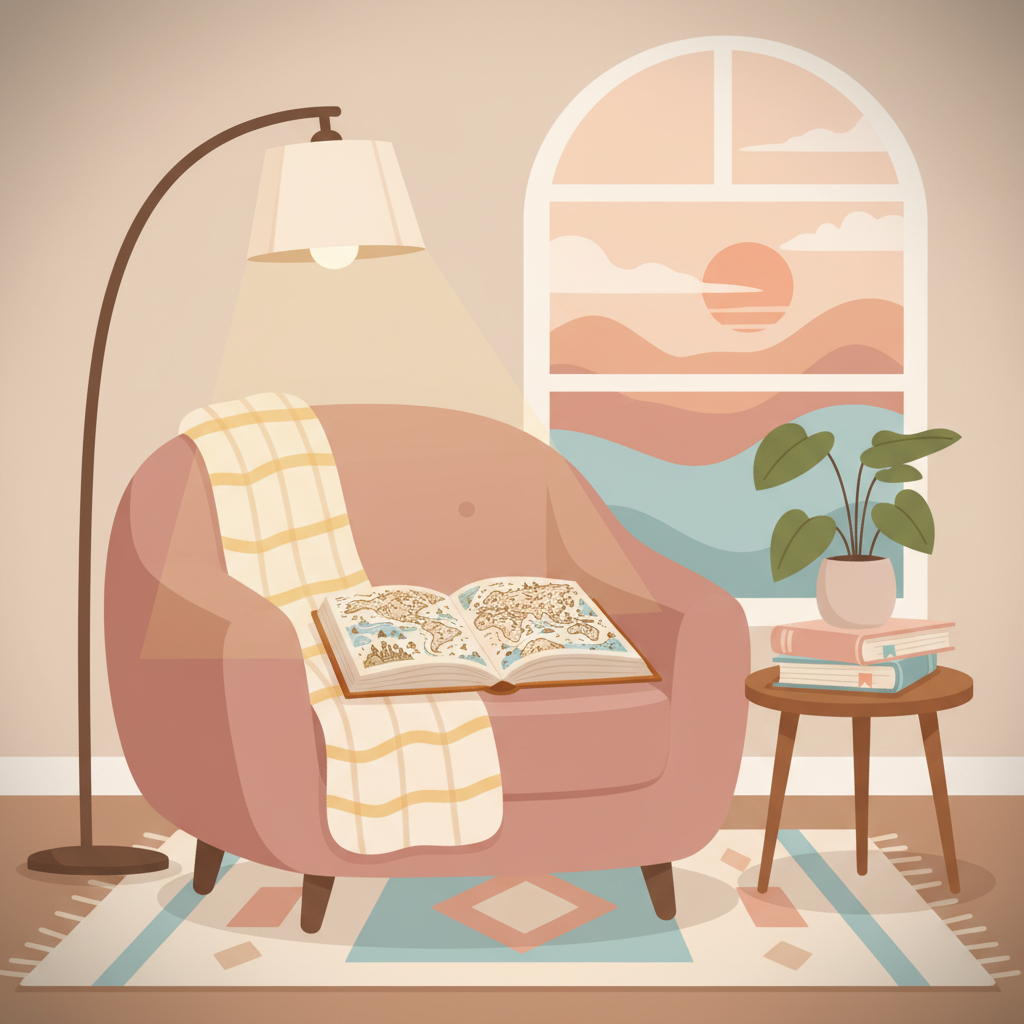
Do you find yourself getting lost in the pages of a book yet wishing you could see the world your favorite characters live in more clearly? For bookworms, the ability to visualize story settings can transform an ordinary reading session into a fully immersive adventure.
Luckily, building this skill is not about natural talent but about developing simple daily habits that enhance your imagination and attention to detail. Drawing from expert writing advice and cognitive science, you can learn to bring story settings to life in your mind’s eye.
In this article, we will explore how you as a bookworm can use easy-to-follow daily habits to improve your visualization of story settings, making your reading experience richer and more vivid.
Your 3 Daily Habits To Visualize Story Settings
Habit 1 — Draw Setting Maps
Why: Visualizing story settings becomes easier when you create a concrete reference. Drawing maps, even simple sketches, helps you understand the layout and environment, much like many authors do to keep their stories consistent.
How: After reading a chapter or section that describes a setting, take a few minutes to sketch a basic map of the place. Focus on key landmarks, paths, and distances to anchor the scene in your mind.
Cue: Finish a reading session or a chapter and keep your sketchbook or paper ready for mapping.
Habit 2 — Engage All Your Senses in Reading
Why: Stories come alive when you don’t just read about what things look like but also what they sound like, smell like, or feel like. This sensory engagement deepens your mental image.
How: Pause while reading and imagine what the scene would smell like, the sounds surrounding the characters, the textures you might touch, or even tastes involved. Jot down sensory notes if that helps.
Cue: When you encounter descriptive passages, deliberately slow down to immerse your senses.
Habit 3 — Set a Daily Visualization Practice
Why: Like any skill, visualization improves with practice. Setting aside time to deliberately visualize increases your ability to create vivid mental settings.
How: Spend 5-10 minutes daily recalling a favorite book setting or imagining a new story place. Try to picture it as richly as possible, including colors, shapes, sounds, and even emotional tone.
Cue: Choose a consistent time of day, such as after waking or before bed, as your visualization moment.
Week 1 Schedule
| Day | Activity |
|---|---|
| Monday | Read a story chapter and draw a map of the setting. |
| Tuesday | While reading, note sensory details for sounds and smells. |
| Wednesday | Practice 5 minutes vivid visualization of a favorite story setting. |
| Thursday | Draw a map from a new story or expand an earlier map. |
| Friday | Focus on texture and taste in story environments and jot notes. |
| Saturday | Visualization practice with a new imagined setting. |
| Sunday | Review your drawings and notes, reflect on improvements. |
Troubleshooting
Barrier: Feeling overwhelmed by drawing or not confident in your artistic skills.
Fix: Remember maps are just for you; simple shapes and stick figures work well. The goal is understanding, not art. Use pencils so you can erase and adjust easily.
Barrier: Struggling to engage senses beyond sight while reading.
Fix: Practice by spending time each day focusing on one sense at a time. Watch movies or look at photos and consciously name smells or sounds you imagine to build sensory awareness.
Barrier: Forgetting to do your daily visualization practice.
Fix: Tie the habit to an existing routine, like right after breakfast or before bed, and use a reminder app or sticky note to prompt you initially.
FAQs
Q: Do I need to be good at drawing to create story maps?
A: No, the goal is to boost mental clarity, not produce art. Rough sketches or labeled outlines are perfect to help visualize story settings.
Q: Can these habits help me remember story details better?
A: Absolutely. Engaging actively with the setting through drawing, sensory exploration, and visualization deepens memory and comprehension.
Q: How long will it take to improve my ability to visualize story settings?
A: With consistent daily habits, you should notice improvement in a few weeks, as your brain builds stronger mental images naturally over time.
Tracking & Motivation Tips
Track your sessions in a journal or app by noting what habit you did, how long you spent, and any new insights you gained. Celebrate small wins, like feeling more vivid imagery or completing a map. Setting specific goals for each week can fuel continued motivation as you enhance your skill to visualize story settings.
Key Takeaways For Visualizing Story Settings
By incorporating daily habits like map drawing, sensory engagement, and dedicated visualization practice, you as a bookworm can greatly improve your ability to visualize story settings. This not only enhances your reading enjoyment but also makes scenes more vivid and memorable. Keep the habits simple and consistent to see steady progress toward immersing yourself fully in every story you read.
Ready to build your visualization skills with guided daily habits? Try Dayspire, the AI coach app designed to help you build simple habits that turn your reading and creativity into an immersive experience every day.