
As a tea lover, you might often find yourself wondering how to capture the perfect flavor in your cup. Creating your own tea blends can seem both exciting and intimidating, but it does not have to be that way.
By adopting simple daily habits, you can gradually learn to blend teas with confidence and creativity. These habits help you deepen your understanding of flavors, develop your palate, and refine your blending skills over time.
In this article, you will discover approachable daily habits that make the goal of creating unique tea blends enjoyable, achievable, and deeply satisfying.
Your 3 Daily Habits to Help You Create Tea Blends
Habit 1 — Daily Tea Tasting and Flavor Exploration
Why: To create tea blends you love, you need to know your ingredients well. The best way to do this is through tasting different teas and ingredients daily, helping you develop your palate and understand their unique flavor notes.
How: Each day, steep a small cup of a pure tea or a single ingredient such as chamomile, mint, or cinnamon. Sip mindfully, noting the aroma, taste, and mouthfeel. Jot down simple observations in a notebook to track what stands out.
Cue: Make this part of your morning or afternoon tea ritual so it feels natural and enjoyable.
Habit 2 — Experiment With Small Batch Blends
Why: Blending in small batches allows you to try new ingredient combinations without wasting materials. Repeated daily experiments help you discover what balances work best.
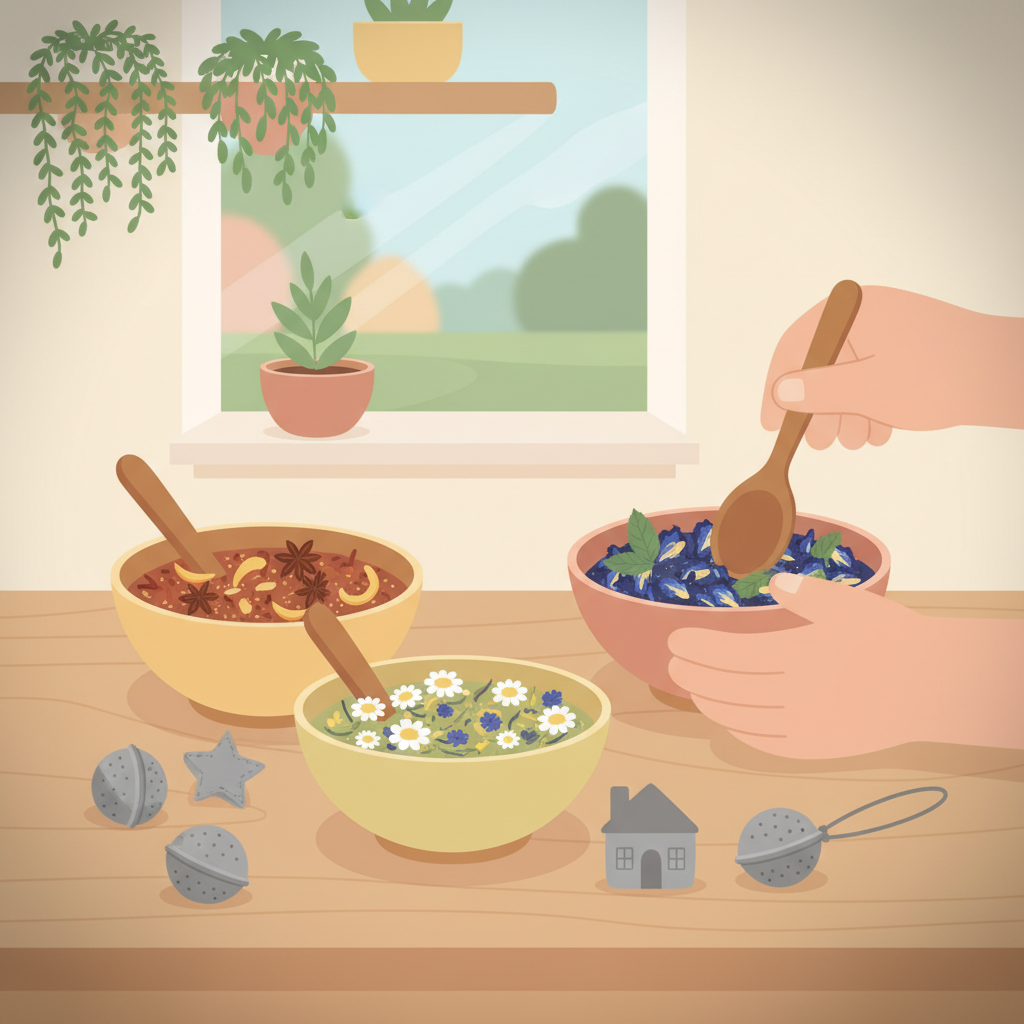
How: Take 2–3 ingredients you enjoyed from your tastings and mix small portions (about 2 grams total) in a bowl. Brew and taste your custom blend. Adjust ratios and combinations each time to explore new profiles.
Cue: Keep your tea blending kit and notebook easily accessible in your kitchen or tea space.
Habit 3 — Document and Reflect on Your Blending Results
Why: Trying different blends daily can get confusing. Writing down your blends, measurements, and tasting notes helps you remember which mixes succeeded or failed, accelerating your progress.
How: After tasting, record the ingredients, amounts, steep times, and your flavor impressions in a dedicated notebook or digital note. Reflect weekly on patterns you like and changes to try next.
Cue: End your tea blending session by noting your thoughts; this helps close the habit loop.
Week 1 Schedule
| Day | Activity |
|---|---|
| Monday | Taste one pure tea and note flavors |
| Tuesday | Try one dried herb or spice in tea and record notes |
| Wednesday | Create a simple 2-ingredient blend and try brewing it |
| Thursday | Taste your previous blend and adjust ingredient amounts |
| Friday | Experiment with adding a floral element like lavender or jasmine |
| Saturday | Document your favorite blends and reflect on what you enjoy most |
| Sunday | Rest or enjoy a tea of your choice mindfully without blending |
Troubleshooting
Barrier: Feeling overwhelmed by too many ingredient options.
Fix: Use your focus_keyword by starting with a few familiar teas and herbs, building complexity gradually.
Barrier: Struggling to notice subtle flavor differences between ingredients.
Fix: Practice your daily tea tasting habit consistently and take detailed notes to train your palate.
Barrier: Forgetting previous blend recipes or results.
Fix: Keep a dedicated notebook or app handy to track your blend formulas and tasting feedback daily.
FAQs
Q: Do I need any special equipment to start to create tea blends?
A: To create tea blends, start with simple tools like a small kitchen scale, teaspoon, mixing bowl, and a timer for brewing. These basics help you measure and experiment precisely without complicated gear.
Q: How can I know if a blend is balanced or needs adjustment?
A: When you create tea blends, look for harmony between the base tea and added ingredients. No one flavor should overpower; your focus_keyword habit of tasting and noting will help you recognize balance over time.
Q: Can I blend herbal teas and true teas together?
A: Yes, but pay attention to steeping guidelines since herbal and true teas may require different water temperatures and times. Gradually experiment with your focus_keyword habit for best results.
Tracking & Motivation Tips
Tracking your progress with your focus_keyword habit is key. Use a notebook or digital app to jot daily tasting notes, blend ratios, and changes you make. Celebrate small discoveries like identifying a new flavor or creating a blend you genuinely enjoy. Make your habits fun by sharing your blends with friends or posting about your journey. This positive feedback loop keeps your enthusiasm alive and grounds your daily practice.
Key Takeaways for Creating Tea Blends
Your focus_keyword goal becomes much more achievable by building three simple daily habits: tasting individual ingredients to know their flavors, experimenting with small blends to find balance, and documenting your results to learn faster. Keep it fun, take it slow, and trust your senses. With consistent habits, you will develop a personal approach to tea blending that delivers joy in every cup.