
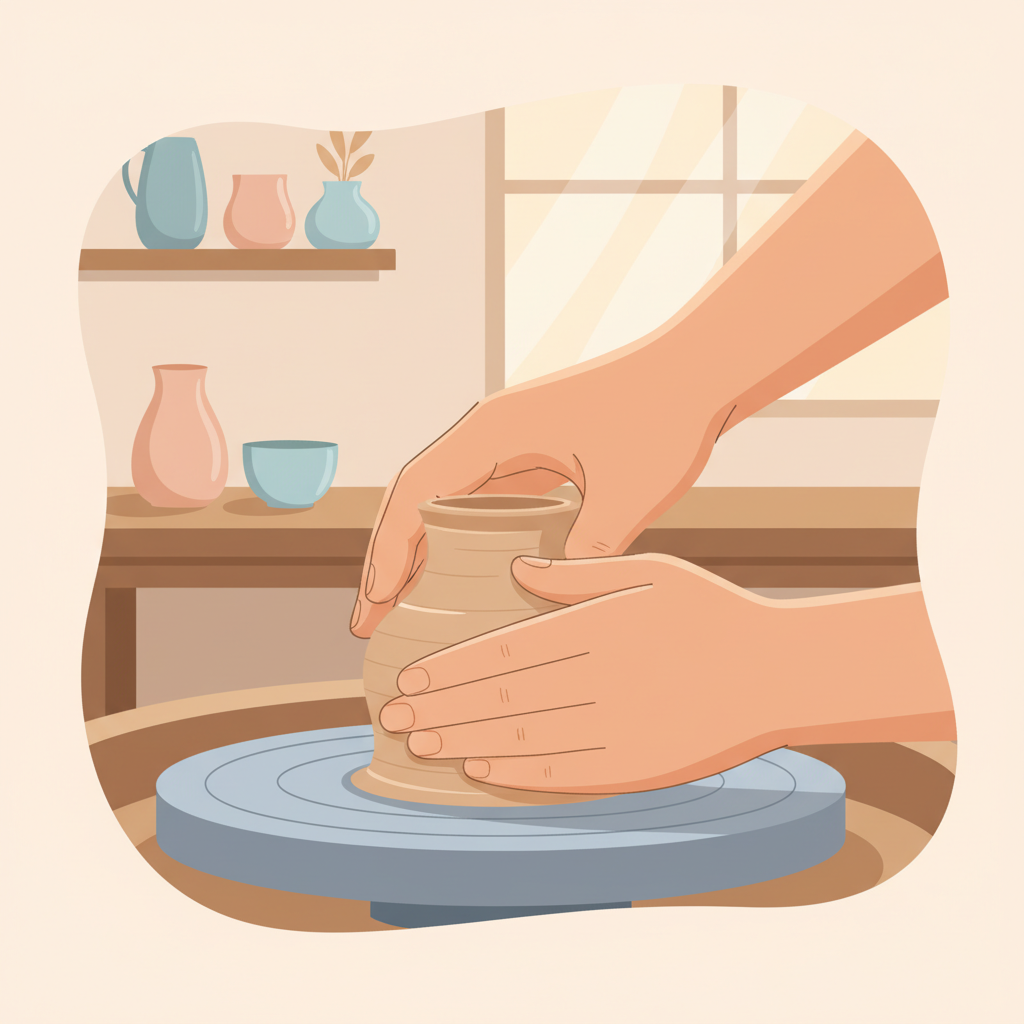
Developing a keen tactile sensitivity to clay can transform your pottery practice. Feeling every contour and texture of your clay allows you to create more intricate, expressive pieces with greater ease.
Luckily, this kind of sensitivity grows best when nurtured through small, deliberate daily habits. Just like building muscle, your hands and fingers become more attuned over time by gentle, focused practice.
In this article, you will discover three simple daily habits that potters can use to gradually enhance their tactile clay sensitivity. These practices are easy to fit into your routine and deliver lasting improvements in how you connect with your craft.
Your 3 Daily Habits For Developing Tactile Clay Sensitivity
Habit 1 — Mindful Clay Exploration
Why: Mindfully exploring clay textures helps your brain and hands communicate more clearly, which is essential for tactile clay sensitivity.
How: Spend 5–10 minutes each day kneading and gently pressing clay, noticing differences in softness, moisture, and resistance. Try rolling small clay balls or pinching the edges to feel subtle texture changes.
Cue: Do this immediately before your pottery session or during a break to refresh your senses.
Habit 2 — Finger Dexterity Exercises
Why: Strengthening your finger muscles and improving coordination makes you more sensitive to subtle tactile feedback from clay.
How: Use squeezing balls, finger stretches, or simple hand exercises daily. Rolling small objects like marbles or beads between your fingers also advances fine motor control.
Cue: Pair these exercises with your morning routine or while watching television for consistency.
Habit 3 — Texture Journaling
Why: Describing and reflecting on tactile sensations deepens your sensory awareness and mind-body connection.
How: After working with clay or your exercises, jot down a few notes about how the clay felt today. Use words like “smooth,” “sticky,” “cool,” or “firm” to describe textures and pressure.
Cue: Keep a small notebook or digital note on hand right after clay time or finger exercises.
Week 1 Schedule
| Day | Mindful Clay Exploration | Finger Dexterity Exercises | Texture Journaling |
|---|---|---|---|
| Monday | 5 mins before practice | 10 mins morning | After clay session |
| Tuesday | 5 mins before practice | 10 mins morning | After clay session |
| Wednesday | 5 mins before practice | 10 mins morning | After clay session |
| Thursday | 5 mins before practice | 10 mins morning | After clay session |
| Friday | 5 mins before practice | 10 mins morning | After clay session |
| Saturday | Optional extra exploration | 10 mins morning | After clay session |
| Sunday | Rest day or light touch play | Rest | Reflective journaling |
Troubleshooting
Barrier: Clay feels too sticky or uncomfortable to handle.
Fix: Use mindful clay exploration to gently acclimate to the texture, and try dampening your hands or the clay for better control when developing tactile clay sensitivity.
Barrier: Forgetting to do finger exercises daily.
Fix: Link exercises to a daily habit you already have, like brushing your teeth, to reinforce consistency in building tactile clay sensitivity.
Barrier: Trouble noticing subtle texture differences.
Fix: Slow down your clay exploration sessions and use texture journaling to focus more on sensations, strengthening tactile awareness.
FAQs
Q: How long does it take to notice improvements in tactile clay sensitivity?
A: With daily habits, many potters notice a difference in hand sensitivity within two to four weeks, but continued practice deepens and maintains progress.
Q: Can these habits help if I struggle with sensitive or irritated skin?
A: Yes, starting gently and gradually increasing tactile exposure helps your skin get used to clay textures without irritation, promoting better tactile clay sensitivity.
Q: Are there tools that can support developing tactile sensitivity?
A: Yes, using different clays, textured surfaces, or hand therapy equipment can complement daily habits to enhance your tactile clay sensitivity.
Tracking & Motivation Tips
Keep a simple log or journal to record your daily habits and note sensations or progress in tactile clay sensitivity. Celebrate small wins like noticing a new texture or improved finger movement. Visual progress motivates ongoing practice and deepens focus.
Key Takeaways For Developing Tactile Clay Sensitivity
Consistent mindful clay exploration, focused finger dexterity exercises, and reflective texture journaling are three manageable daily habits that potters can use to strengthen tactile clay sensitivity. These habits build hand coordination, sensory awareness, and confidence in your touch, all of which improve your pottery experience and artistic expression.