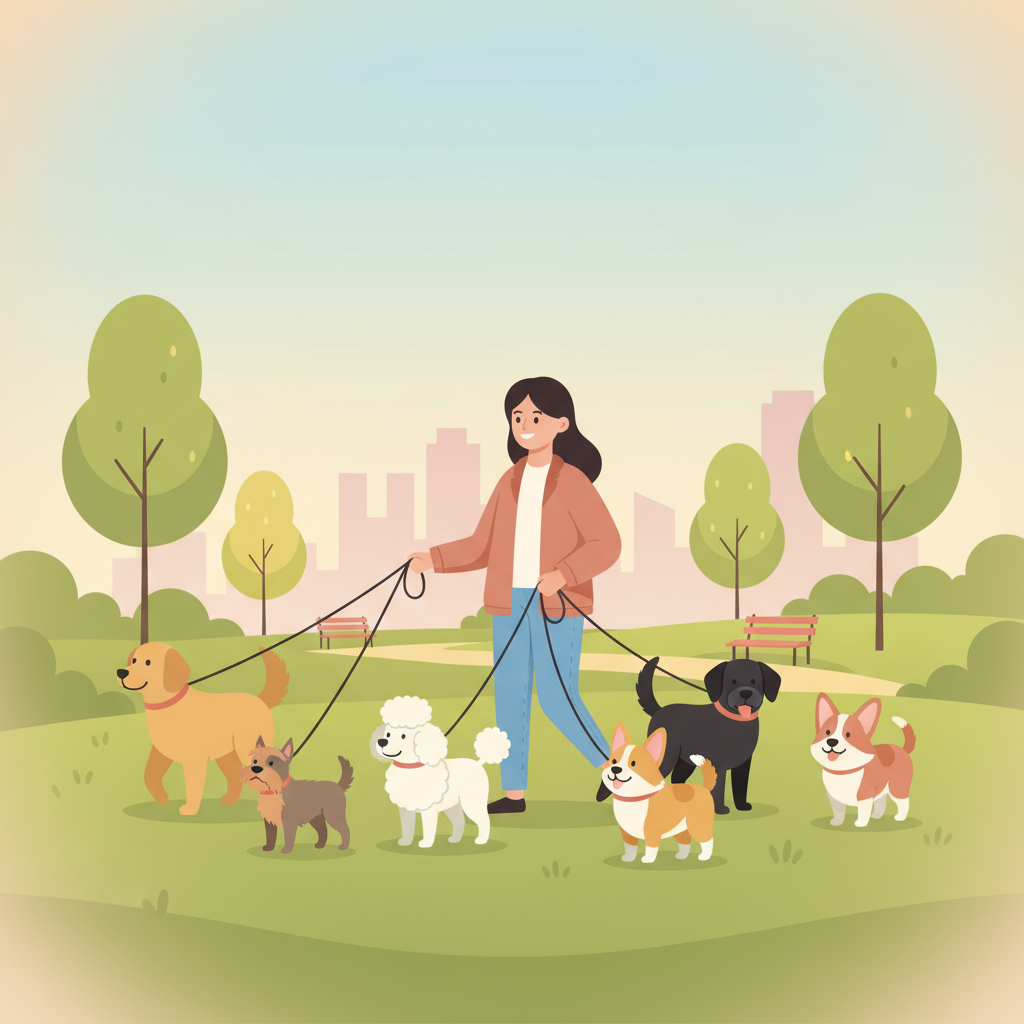
If you are a dog walker, you know firsthand how challenging it can be to keep dogs calm, focused, and well-behaved during walks. Handling multiple dogs or even a single energetic dog requires skill and patience.
Improving dog handling does not have to be daunting. By introducing simple daily habits rooted in positive reinforcement and consistency, you can make walks safer, smoother, and more enjoyable—for you and the dogs in your care.
In this article, you will discover practical, manageable habits that every dog walker can apply daily to see real progress in dog handling and leash behavior.
Your 3 Daily Habits To Improve Dog Handling
Habit 1 — Reward Good Leash Behavior
Why: Rewarding calm and polite walking encourages dogs to repeat this desired behavior, making your job easier and safer.
How: Carry treats or a favorite toy, and the moment your dog walks calmly by your side, offer praise and a reward immediately. Be consistent to build clear associations.
Cue: Begin the walk by giving the dog a verbal cue like “let’s go” to signal the start, and reward calm walking promptly.
Habit 2 — Practice Frequent Focus Check-Ins
Why: Keeping the dog’s attention on you during walks helps prevent distractions and pulling.
How: Regularly ask for your dog’s attention by calling their name or using a command like “look.” Reward when they respond and maintain eye contact.
Cue: Use a consistent phrase or whistle to gain attention before rewarding focus.
Habit 3 — Use Controlled Environments for Training
Why: Starting training in calm, distraction-free areas builds foundational skills before tackling busy environments.
How: Schedule short sessions in your yard or a quiet park to practice loose leash walking and commands. Gradually increase complexity as dogs improve.
Cue: Designate a routine time and place for these training sessions, signaling a learning mindset for the dog.
Week 1 Schedule
| Day | Activity | Duration |
|---|---|---|
| Monday | Reward calm leash walking during all walks | 15-20 minutes per walk |
| Tuesday | Focus check-in practice in a quiet park | 10-15 minutes |
| Wednesday | Use controlled environment training session | 15 minutes |
| Thursday | Combine leash rewards with focus check-ins on walk | 20 minutes |
| Friday | Training session in controlled environment with added distractions | 15-20 minutes |
| Saturday | Reward calm walking and practice focus check-ins during walks | 20 minutes |
| Sunday | Rest or light practice focusing on rewarding good behavior | 10 minutes |
Troubleshooting
Barrier: Dogs pulling on the leash despite rewards.
Fix: Implement the “stop and go” method. Stop walking immediately when the dog pulls, and only proceed when they have relaxed their leash tension. This teaches calm walking leads to progress, improving improve dog handling.
Barrier: Dogs easily distracted by environment stimuli.
Fix: Increase focus check-in frequency and use high-value rewards to reinforce attention. Gradually introduce distractions in controlled environments to build resilience toward distractions.
Barrier: Inconsistent reinforcement diminishing progress.
Fix: Commit to reinforcing good behaviors consistently. Even occasional lapses can confuse dogs and undo training. Consistency is key to reliably improve dog handling.
FAQs
Q: How often should I reward my dog during walks?
A: Frequent, timely rewards help dogs understand what you want. Initially, reward calm walking and focus often. Gradually reduce frequency as behavior improves but keep occasional rewards to maintain motivation for improve dog handling.
Q: What if the dog does not respond to treats?
A: Some dogs prefer toys, praise, or life rewards like playtime as motivation. Find what motivates the individual dog and use it consistently to help improve dog handling.
Q: Can I train multiple dogs at the same time?
A: Yes, but it requires patience and structured training. Practice skills individually first, then gradually include multiple dogs. Use clear commands and rewards, maintaining control to safely improve dog handling.
Tracking & Motivation Tips
Track your daily efforts to improve dog handling by keeping a walk log noting successes, challenges, and behaviors observed. Celebrate small wins like increased focus or less pulling. Setting reminders and having clear goals boosts consistency and motivation, making improve dog handling a rewarding journey.
Key Takeaways To Improve Dog Handling
Improving dog handling is achievable with simple, consistent daily habits. Rewarding good behavior, practicing focus check-ins, and starting in controlled environments set the foundation for safer, more enjoyable dog walks. With patience and regular practice, you will see improvements that benefit both you and the dogs under your care.
Join the Waitlist
Ready to put these habits into action? Dayspire helps you reach any goal with simple daily habits. Join the waitlist now to be the first to get invited to Dayspire!